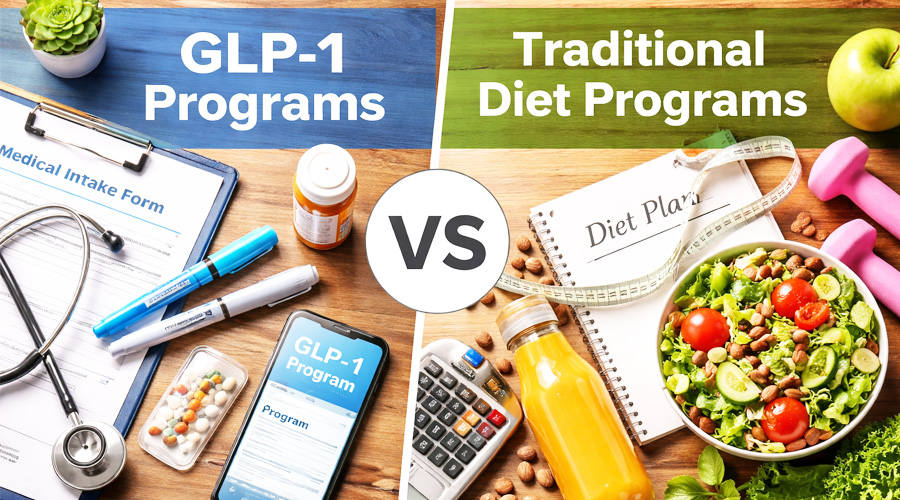
Before comparing features or costs, it helps to understand how these programs are built. GLP-1 programs and traditional diet programs may appear similar on the surface, but they operate under very different systems that shape eligibility, oversight, and responsibility.
GLP-1 programs differ from traditional diet programs because they operate as medical treatment systems rather than lifestyle plans. An online GLP-1 program centers on prescription access, clinician review, and pharmacy fulfillment, while diet programs focus on food guidance or coaching without medical oversight.
A GLP-1 telehealth program structure includes medical intake and eligibility screening reviewed by licensed clinicians. Prescribing decisions remain clinician-led. Platforms manage enrollment and logistics. Traditional diet programs do not review medical history or coordinate prescriptions.
This distinction explains how GLP-1 weight loss programs work compared with diet plans. A medical GLP-1 program follows clinical rules, while diet programs remain self-directed systems focused on behavior rather than regulated medical care.
1. Traditional Diet Program Structure and How These Plans Typically Work
Traditional diet programs are built around behavioral participation rather than medical review. Enrollment is usually open, with no eligibility screening or clinician involvement. These programs operate as consumer wellness products, not regulated medical services (NIH, 2023).
Common structural elements often include:
structured meal plans or food lists
point systems or calorie tracking tools
habit-based education or coaching access
optional group support or digital communities
Participation depends on user adherence rather than clinical approval. Costs are typically presented as flat subscriptions. Pricing may vary by coaching level or digital features. Medication access, prescribing authority, and pharmacy coordination are not part of traditional diet program structures.
2. GLP-1 Program Structure and Telehealth-Based Medical Care
GLP-1 programs are organized as telehealth-enabled medical services rather than consumer wellness products (Cleveland Clinic, 2024). Enrollment typically begins through an online platform that collects required medical intake information before any clinical review occurs.
Core structural components usually include:
online enrollment and account setup
required medical intake and disclosures
clinician review with eligibility determination
prescription issuance when approved
pharmacy fulfillment with medication shipping
The platform forwards intake details to a licensed clinician for evaluation. Eligibility and prescribing decisions are made by the clinician, not the platform. The platform manages records, billing, and communication workflows. Ongoing participation depends on continued clinical oversight rather than behavioral compliance alone.
3. Prescription Medication as the Core of GLP-1 Programs
Medication is a defining structural difference between GLP-1 programs and traditional diet programs. GLP-1 programs center on prescription medications such as semaglutide or tirzepatide, which require clinician evaluation and ongoing medical oversight (Mayo Clinic, 2024).
In these programs, medication access is not automatic. Prescriptions are issued only when a licensed clinician determines eligibility based on medical intake information. The platform does not select medications or set treatment decisions.
Pharmacy fulfillment is integrated into the program structure. Medications are dispensed through licensed pharmacies and shipped according to regulatory requirements. Traditional diet programs do not include prescription medication, pharmacy coordination, or clinician-managed treatment pathways.
Important Clarification
Platform enrollment and account access do not equate to medication approval. Prescribing decisions are made independently by licensed clinicians based on medical review and regulatory requirements.
4. Eligibility Screening and Clinical Approval in GLP-1 Programs
Differences in eligibility and screening between GLP-1 programs and traditional diet programs are often summarized by required steps and decision authority.
Table 1. Eligibility and Screening Requirements by Program Type
Screening element
GLP-1 programs
Traditional diet programs
Medical intake required
Yes
No
Health history review
Reviewed by licensed clinician
Not collected
Medication review
Required before prescribing
Not applicable
Eligibility determination
Made by licensed clinician
Not required
Approval guaranteed
No
Not applicable
Eligibility screening is a required step in GLP-1 programs (NIH, 2023). Medical intake information is reviewed by a licensed clinician to assess whether prescribing is appropriate. Approval is not guaranteed and may change over time based on clinical judgment.
Traditional diet programs do not use eligibility screening. Enrollment is generally open after sign-up and payment. There is no medical review process, and participation is not contingent on clinician approval.
5. Medical Oversight in GLP-1 Programs vs Behavioral Coaching Models
Medical oversight is central to how GLP-1 programs function (Cleveland Clinic, 2024). Licensed clinicians review medical intake information and manage care within regulated clinical frameworks. Ongoing participation depends on continued medical review rather than goal adherence or coaching milestones.
In GLP-1 programs, medical oversight typically includes:
review of medical intake information
eligibility determination by licensed clinicians
prescribing decisions managed within clinical standards
Traditional diet programs rely on behavioral coaching models instead of clinical supervision. Support is provided through educational content, group programs, or one-on-one coaching. These services encourage habit change rather than evaluate medical risk or manage treatment decisions.
This distinction reflects different accountability structures. GLP-1 programs operate under healthcare regulations and clinical standards. Diet programs operate as wellness services without medical responsibility for screening, prescribing, or treatment oversight.
6. Cost Structure Differences Between GLP-1 Programs and Diet Plans
Cost presentation differs between GLP-1 programs and traditional diet programs because the underlying services are structured differently (NIH, 2023). These differences are often summarized by how fees are separated and disclosed.
Table 2. Cost Components Commonly Listed by Program Type
Cost component
GLP-1 programs
Traditional diet programs
Platform or membership fee
Common
Common
Clinician review included
Often included in platform fee
Not applicable
Prescription medication cost
Billed separately
Not included
Pharmacy fulfillment and shipping
Billed separately
Not included
Pricing variability over time
Possible
Less common
A GLP-1 program may list a monthly platform fee that covers clinician access, records management, and ongoing support services. Medication costs, pharmacy fulfillment, and shipping are frequently billed separately and may vary over time.
Traditional diet programs typically use simpler pricing models. Costs are usually presented as flat monthly or annual subscriptions tied to digital tools or coaching access. Medication charges, pharmacy fees, and clinical billing are not part of diet program pricing structures.
7. Platform Responsibilities vs Licensed Clinician Authority
GLP-1 programs involve both technology platforms and licensed clinicians, but their roles are clearly separated. Platforms handle enrollment systems, intake collection, billing, and communication tools. They do not make medical decisions.
Licensed clinicians control eligibility determinations, prescribing decisions, and ongoing medical management. Clinical judgment governs whether treatment begins, continues, or changes over time. These decisions are made independently of the platform.
Traditional diet programs do not involve clinician authority. The same organization typically manages content, coaching, enrollment, and billing. There is no separation between operational support and decision-making because no medical treatment is involved.
Important Clarification
Platform services support access and coordination but do not include medical decision-making. Eligibility, prescribing, and treatment management remain the responsibility of licensed clinicians.
8. Limits of GLP-1 Programs and What Is Not Guaranteed
GLP-1 programs do not guarantee eligibility, prescriptions, or continued participation (Mayo Clinic, 2024). Medical decisions are made by licensed clinicians based on intake information and ongoing review. Approval is not automatic and may change over time.
Common limitations of GLP-1 programs include:
no guaranteed eligibility or prescription approval
no platform control over treatment plans or medication selection
no promised results, timelines, or specific outcomes
Platforms do not override clinician judgment or regulatory requirements. Their role is administrative and logistical rather than medical. Participation reflects access to a regulated medical evaluation process, not a guaranteed treatment path or predefined level of response.
9. Why GLP-1 Programs Are Often Compared to Diet Programs
GLP-1 programs and traditional diet programs are often discussed together because both are marketed as weight-related services and frequently operate through online subscription models (NIH, 2023). This surface-level similarity can make them appear interchangeable at first glance.
Several shared features contribute to this comparison:
online enrollment and account access
subscription-style billing models
digital tools for ongoing engagement
emphasis on convenience and remote access
The comparison tends to break down when examining how decisions are made. GLP-1 programs function as regulated medical services with clinician authority. Traditional diet programs function as consumer wellness offerings without medical oversight.
Important Clarification
Similar marketing language or subscription formats do not indicate similar program authority. GLP-1 programs operate under clinician-led medical decision-making, while diet programs do not include clinical oversight or prescribing authority.
10. GLP-1 Programs vs Traditional Diet Programs: Structural Differences at a Glance
GLP-1 programs and traditional diet programs differ in who holds responsibility and decision authority. GLP-1 programs operate as medical services with licensed clinicians, regulated prescribing, and pharmacy coordination. Diet programs function as wellness models centered on behavior and self-management.
These differences shape how enrollment, eligibility, pricing, and oversight work. GLP-1 programs require medical review and ongoing clinical involvement. Diet programs use open enrollment without medical screening.
While the models may look similar on the surface, they operate under different systems. GLP-1 programs are classified as medical services, not traditional diet programs.
Sources:
National Institutes of Health (NIH). Weight management and obesity treatment overview. 2023.