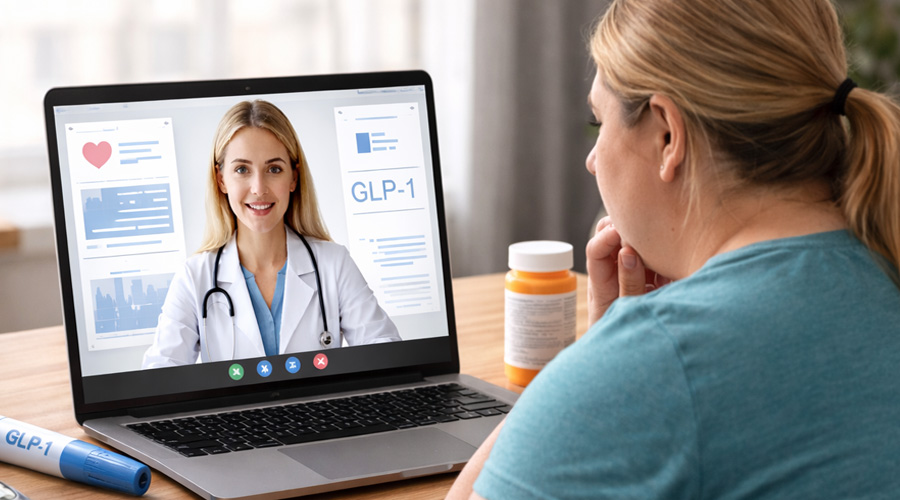
Online GLP-1 evaluations can appear simple on the surface. Defined roles and limits shape how these programs operate. Platforms manage access and coordination, while licensed clinicians control medical review, eligibility determinations, and prescribing decisions.
Online GLP-1 evaluations work as remote medical assessments completed through telehealth platforms. The online GLP-1 evaluation process allows a licensed clinician to review information and decide whether an assessment can occur. The platform supports the process, but it does not make medical decisions.
During a GLP-1 telehealth medical evaluation, licensed clinicians review submitted information using either asynchronous or live formats. How online GLP-1 programs review eligibility depends on clinical judgment, legal requirements, and established medical standards.
GLP-1 evaluation models that do not involve live visits let clinicians review information without real-time interaction. Live evaluations involve scheduled conversations. In all cases, a licensed clinician GLP-1 telehealth review controls medical decisions, not the platform.
1. What Does It Mean When an Online GLP-1 Program Operates Through Telehealth?
When an online GLP-1 program operates through telehealth, it functions as a digital system that connects patients with licensed clinicians. The program itself does not provide medical care. It supplies the technology and administrative structure that allows remote evaluations to occur (NIH, 2023).
Telehealth operation usually includes:
Secure online platforms that collect and route information
Systems that assign evaluations to licensed clinicians
Tools that support communication without in-person visits
These operational functions support access and coordination. They do not replace clinical judgment or shift medical authority away from licensed clinicians.
Important Clarification
Platform access, account creation, or completion of administrative steps does not equal clinical approval. Medical evaluations, eligibility determinations, and prescribing decisions are made independently by licensed clinicians, not by the platform.
2. Who Actually Makes Medical Decisions in Online GLP-1 Telehealth Programs?
Medical decisions in online GLP-1 telehealth programs are made only by licensed clinicians (Cleveland Clinic, 2024). The platform does not approve, deny, or control clinical outcomes. Its role is limited to routing information and supporting access to clinicians.
Table 1. Platform Responsibilities vs Licensed Clinician Responsibilities
Entity
Primary role
What it controls
What it does not control
Telehealth platform
Program infrastructure and coordination
Technology systems, information routing, scheduling tools, administrative support
Medical evaluations, eligibility decisions, prescribing authority
Licensed clinicians
Medical evaluation and clinical judgment
Assessment of cases, application of medical standards, prescribing decisions
The platform cannot override clinician decisions. It does not determine eligibility, prescribing, or treatment direction (CMS, 2024).
3. What Is an Online GLP-1 Evaluation Meant to Assess?
An online GLP-1 evaluation is meant to assess whether a licensed clinician can review a case through telehealth. The evaluation focuses on whether a remote medical review is appropriate. It is not a guarantee of treatment or medication access.
The evaluation is generally designed to assess:
Whether the request falls within telehealth and regulatory limits
Whether sufficient information exists for clinical review
Whether further clinical interaction is required
This assessment supports clinical decision-making. It does not replace medical judgment or predetermine outcomes.
Important Clarification
An online GLP-1 evaluation determines whether a clinician can conduct a telehealth review. It does not determine eligibility, approve treatment, or promise medication access, which remain clinical decisions made independently by licensed clinicians.
4. How Do Live and Non‑Live GLP-1 Evaluations Typically Differ?
Online GLP-1 evaluations are commonly offered in two formats, live and non-live (Mayo Clinic, 2024). Both formats allow licensed clinicians to review information through telehealth. The difference relates to how and when communication occurs, not to who controls medical decisions.
Non-live evaluations allow clinicians to review submitted information without a scheduled conversation. Live evaluations include real-time discussion between the clinician and the individual.
Table 2. Structural Differences Between Live and Non‑Live GLP‑1 Evaluations
Evaluation format
Structural characteristics
Non-live evaluation
Information is reviewed without a scheduled conversation
Non-live evaluation
Clinician review occurs without real-time interaction
Live evaluation
Includes a scheduled, real-time discussion
Live evaluation
Allows direct clinician interaction during the review
Both formats follow the same clinical standards for review. The evaluation method does not change clinician authority or guarantee outcomes.
5. What Information Is Reviewed During an Online GLP-1 Evaluation?
During an online GLP-1 evaluation, licensed clinicians review information needed to determine whether a telehealth assessment can proceed. The focus is on clinical review suitability, not on making final treatment decisions.
Information reviewed during the evaluation process commonly includes:
Details required to confirm identity and location for telehealth use
Health-related information relevant to clinical review
Disclosures needed to meet legal and regulatory standards
The specific information reviewed can vary by program. Platforms collect and route information, but clinicians determine how it is used in medical review.
6. What Does an Online GLP-1 Evaluation Not Decide or Guarantee?
An online GLP-1 evaluation does not decide final eligibility, prescribing, or treatment outcomes (NIH, 2023). The evaluation only determines whether a licensed clinician can assess a case through telehealth. It is not an approval step and does not promise medication access.
The evaluation process does not guarantee:
Table 3. What an Online GLP‑1 Evaluation Does Not Guarantee
Evaluation role
What is not guaranteed
Evaluation review
That a prescription will be written
Evaluation review
That medication will be provided or shipped
Evaluation review
That ongoing care will be offered
All medical decisions remain conditional. Licensed clinicians make determinations based on clinical judgment, legal limits, and available information.
7. Why Do Online GLP-1 Evaluation Processes Vary Across Programs?
Online GLP-1 evaluation processes vary because platforms operate under different clinical networks, state rules, and operational designs. These differences affect how evaluations are structured, but they do not change who controls medical decisions.
Variation across programs commonly relates to:
How information is collected and routed to clinicians
Whether evaluations use live or non-live formats
How platforms support communication and follow-up
These differences reflect system design choices. Licensed clinicians still apply the same legal and clinical standards when reviewing cases.
Important Clarification
Differences in evaluation structure reflect platform design and regulatory context. They do not expand or limit clinician authority, alter medical standards, or change how eligibility and treatment decisions are determined.
8. What Are Common Misunderstandings About Platform Roles and Clinician Authority?
A common misunderstanding is that online GLP-1 platforms make medical decisions. In practice, platforms do not diagnose, approve treatment, or issue prescriptions. They only provide the systems that support telehealth access.
Table 4. Common Assumptions vs Actual System Operation
Common assumption
How the system actually works
The platform makes medical decisions
Medical decisions are made only by licensed clinicians
Completing an evaluation guarantees medication
Evaluations do not promise prescriptions or treatment
Administrative review equals clinical approval
Administrative steps do not replace clinical judgment
These misunderstandings often arise from marketing language. In actual operation, licensed clinicians retain full medical authority at every stage.
9. What Defines the Scope and Limits of Online GLP-1 Evaluations?
Online GLP-1 evaluations are limited to determining whether a licensed clinician can assess a case through telehealth. They do not establish treatment plans, guarantee prescriptions, or replace in-person medical care when required.
Platforms manage access, technology, and coordination. Licensed clinicians retain full authority over medical decisions and outcomes.
This boundary defines how online GLP-1 evaluations typically work. Clinical judgment, legal rules, and individual circumstances ultimately determine what happens next.
Sources:
National Institutes of Health (NIH). Telehealth and remote care overview. 2023.
Cleveland Clinic. Telehealth care and clinician roles. 2024.
Mayo Clinic. Telehealth visits and remote medical evaluations. 2024.
Centers for Medicare & Medicaid Services (CMS). Telehealth services and provider authority guidance. 2024.
U.S. Food and Drug Administration (FDA). Telemedicine, prescribing, and regulatory oversight. 2024.