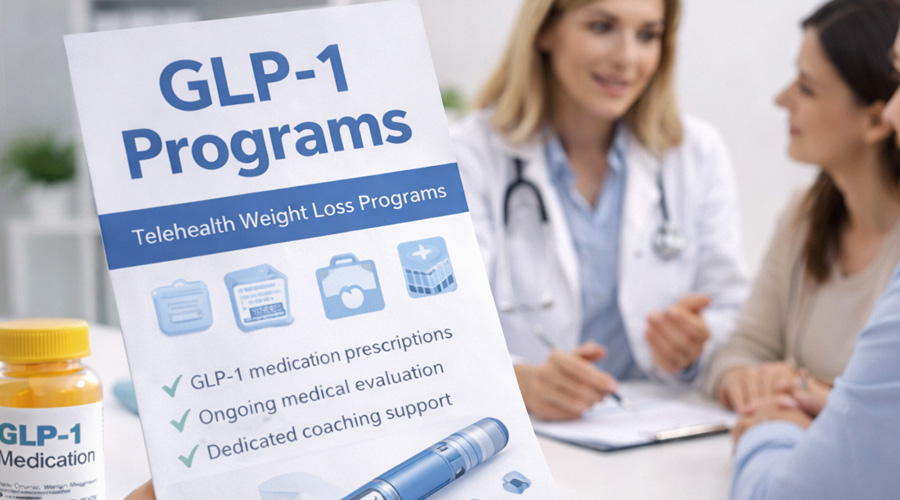
GLP-1 programs did not emerge because of a single innovation or trend. They developed at the intersection of healthcare system limits, telehealth expansion, and administrative complexity. Understanding why they exist requires examining how care delivery, regulation, and workflow design evolved.
GLP-1 programs exist as a separate care model because traditional healthcare was not designed to manage long-term, medication-based weight care at scale. Online GLP-1 programs organize access, intake, and follow-up within regulatory limits, while clinical decisions remain with licensed clinicians.
This GLP-1 telehealth care model developed in response to system-level gaps. Primary care settings often lack the time, infrastructure, and administrative capacity needed for ongoing weight management workflows.
As a result, the online GLP-1 program structure functions as an operational layer. It supports documentation, coordination, and pharmacy fulfillment without replacing clinicians or redefining how GLP-1 care decisions are made.
1. Why Traditional Healthcare Systems Were Not Built for GLP-1 Weight Management
U.S. healthcare systems were built around acute care and episodic visits rather than long-term weight management.
Key structural characteristics include:
Short appointment lengths focused on single clinical issues
Billing models tied to problem-specific visits
Referral-based escalation across specialties
Weight management has historically fallen between specialties. It is often addressed inconsistently across primary care, endocrinology, and bariatric services, without a dedicated operational framework (NIH, 2023).
Because of this structure, ongoing medication-related weight care has lacked:
Standardized intake processes
Consistent follow-up cadence
Unified documentation pathways
As demand increased, existing care models struggled to absorb the administrative and coordination load. This mismatch between system design and care needs set the foundation for separate GLP-1 program models.
2. Why GLP-1 Medications Require Ongoing Care Workflows
Medication-based weight management involves ongoing review rather than one-time clinical decisions. Traditional care settings are structured around isolated visits, not continuous documentation and reassessment (Cleveland Clinic, 2024).
GLP-1 medications introduced workflow demands that extend beyond standard appointment cycles. Common operational requirements include:
Repeated medical intake reviews
Updates to health and eligibility information
Coordination across prescribing and pharmacy fulfillment
In conventional systems, these steps are fragmented across offices, portals, and referral paths. That fragmentation increases administrative burden without creating a single accountable process.
Separate GLP-1 programs emerged to centralize these operational tasks. The model focuses on managing workflow complexity while leaving prescribing authority and clinical judgment with licensed clinicians.
Important Clarification. Platform participation and program enrollment do not determine medical eligibility or prescribing outcomes. Clinical approval, prescribing decisions, and treatment oversight remain the responsibility of licensed clinicians, independent of platform operations.
3. Administrative and Access Gaps That Led to Online GLP-1 Programs
Access to weight management care has been limited by scheduling, referral, and capacity constraints. Many primary care practices operate with long wait times and brief visit windows (Mayo Clinic, 2024).
Administrative requirements add further friction. Insurance rules, documentation standards, and referral processes can delay or interrupt continuity of care.
These barriers are structural rather than clinical. They reflect how healthcare delivery systems allocate time, staff, and resources across competing priorities.
Table 1. Common Structural Constraints Affecting Weight Management Care
Structural constraint
How it affects weight management care
Limited appointment availability
Reduces time available for ongoing intake review and follow-up
Referral-based care pathways
Introduces delays between evaluation and ongoing management
Fragmented documentation systems
Splits records across portals, offices, and vendors
Competing visit priorities
Shifts focus away from long-term weight management needs
Administrative workload
Increases coordination burden without a single accountable workflow
GLP-1 programs developed to address these access and coordination gaps. The separate model creates a defined pathway for intake, review, and follow-up outside traditional visit-based constraints.
4. How Telehealth Enabled the Online GLP-1 Care Model
Telehealth expanded the ability to deliver care outside physical clinic settings (NIH, 2023).
Key telehealth capabilities include:
Remote medical intake and form collection
Asynchronous communication between visits
Centralized record handling and storage
These capabilities changed how care workflows could be organized. Medical intake forms, identity verification, and clinician review no longer required in-person scheduling.
As telehealth matured, platforms began supporting repeat interactions rather than single encounters. This made it possible to manage ongoing documentation and coordination across time.
GLP-1 programs formed around this infrastructure. The separate model reflects how telehealth enabled new operational arrangements without changing clinical authority or prescribing rules.
Important Clarification. Telehealth access and platform-based workflows do not expand clinical authority or alter prescribing standards. Licensed clinicians remain solely responsible for eligibility determinations, prescribing decisions, and clinical oversight, regardless of delivery method.
5. Platform Roles Versus Clinician Authority in GLP-1 Programs
GLP-1 programs separate operational management from medical decision-making by design. Platforms handle intake systems, record organization, and communication infrastructure.
Licensed clinicians retain control over eligibility review, prescribing decisions, and ongoing clinical judgment. Platforms do not diagnose conditions or determine treatment outcomes.
Table 2. Operational Responsibilities Versus Clinical Decision Authority in GLP-1 Programs
Platform-managed functions
Clinician-controlled decisions
Medical intake collection
Eligibility determination
Identity and record verification
Prescribing decisions
Communication and messaging systems
Medication selection and continuation
Workflow coordination
Clinical monitoring and judgment
Pharmacy routing support
Treatment changes or discontinuation
This division reflects regulatory requirements and professional standards. Medical decisions must remain with licensed providers, regardless of how care access is organized (APA, DSM-5-TR).
The separate care model makes these boundaries explicit. It allows platforms to manage logistics while clinicians remain responsible for patient care decisions.
6. Why Online GLP-1 Programs Use Ongoing Service Models
GLP-1 programs are typically organized as ongoing services rather than one-time encounters. This structure reflects the administrative and monitoring demands tied to long-term medication use.
Ongoing services allow platforms to support functions that are difficult to manage through isolated visits, including:
Maintaining active medical records over time
Updating medical intake information as health data changes
Supporting consistent communication channels
The service-based structure also supports continuity across prescribing cycles and pharmacy fulfillment processes. It creates a stable framework for coordination without defining clinical outcomes.
Important Clarification. Ongoing program enrollment and service access do not establish or guarantee clinical eligibility, prescribing approval, or treatment continuation. All medical determinations remain under the independent authority of licensed clinicians, separate from platform operations.
7. Regulatory and Pharmacy Fulfillment Factors Shaping GLP-1 Programs
GLP-1 programs also developed in response to regulatory and pharmacy requirements. Prescribing rules, identity checks, and recordkeeping standards must be met regardless of care setting.
Pharmacy fulfillment adds another layer of coordination. Prescriptions must be routed to licensed pharmacies, verified, and dispensed according to state and federal rules.
In traditional care settings, these steps are handled across separate systems with limited visibility. This can slow coordination and increase administrative complexity.
Table 3. Regulatory and Pharmacy Fulfillment Responsibilities in GLP-1 Programs
Requirement or process
Where it is handled
Prescribing authority
Licensed clinician
Patient identity verification
Platform intake systems
Medical record retention
Platform and clinician systems
Prescription dispensing
Licensed pharmacy
Shipping and tracking
Pharmacy fulfillment partners
Regulatory compliance oversight
Platform coordination with clinicians
The separate GLP-1 program model centralizes these compliance and fulfillment workflows. It supports regulatory alignment and pharmacy coordination without altering prescribing authority (NIH, 2023).
8. What GLP-1 Programs Are Designed to Support, Not Replace
GLP-1 programs were designed to address structural gaps rather than replace existing healthcare. Their primary focus areas include:
Access organization for medication-based weight management
Administrative coordination across care steps
Workflow management for ongoing services
These programs do not substitute for primary care, specialty care, or in-person services. They also do not remove the need for clinician oversight or independent medical judgment.
Instead, the separate model functions alongside traditional care systems. It creates a defined pathway for medication-based weight management without altering how broader healthcare delivery operates.
Important Clarification. The existence of GLP-1 programs as a parallel care model reflects structural support needs within healthcare systems. It does not indicate replacement of traditional care or a shift in clinical authority away from licensed clinicians.
9. Why GLP-1 Programs Exist as a Separate Care Model
GLP-1 programs exist as a separate care model because healthcare systems were not designed for scalable, ongoing medication-based weight management. The model reflects structural adaptation rather than clinical preference.
Telehealth infrastructure, administrative constraints, and regulatory requirements shaped how these programs formed. Each element addressed gaps in access, coordination, and workflow management.
Taken together, these factors explain why GLP-1 programs operate alongside traditional care. The separation organizes delivery mechanics while leaving medical decisions with licensed clinicians.
Sources:
National Institutes of Health (NIH). Health care delivery and chronic disease management. 2023.
Mayo Clinic. Access to care and care coordination overview. 2024.
Cleveland Clinic. Long-term medication management and follow-up care. 2024.
American Psychiatric Association (APA). DSM-5-TR clinical responsibility standards.
U.S. Department of Health and Human Services (HHS). Telehealth and care delivery overview.