Online GLP-1 screening depends on accurate self-reported information, yet many assume submission alone determines approval. This article clarifies what applicants are responsible for disclosing, what clinicians evaluate independently, and where responsibility ends within the telehealth screening process.
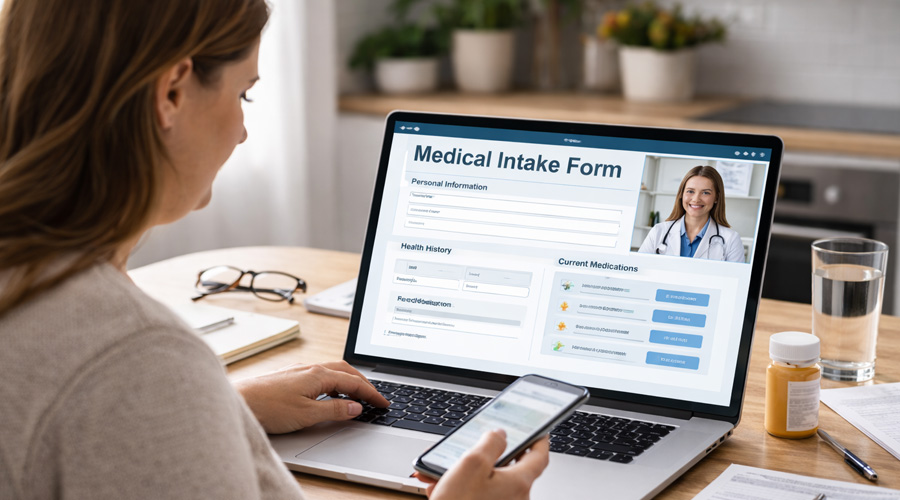
During GLP-1 screening, applicants must provide accurate personal details, medical history, current medications, and other required disclosures as part of the online GLP-1 telehealth intake. This eligibility screening information allows a licensed clinician to evaluate medical appropriateness under established standards. Applicants submit this information for review.
Providing information does not determine approval or denial. Licensed clinicians review submissions independently and make all eligibility and prescribing decisions based on clinical judgment.
Platforms collect and transmit medical intake information but do not control outcomes. Accuracy and completeness are required for a safe, compliant review by clinicians.
1. What Information Do Applicants Have to Provide During GLP-1 Screening?
Online GLP-1 programs typically require several categories of disclosure during medical intake. These categories give licensed clinicians a clear, current view of an applicant’s health status.
Common GLP-1 eligibility screening information needed can be grouped into structured categories:
Table 1. Categories of Information Typically Required During GLP-1 Screening
Category
Examples of Required Disclosure
Identity Information
Legal name, date of birth, and contact details used to verify identity
Basic Health Data
Height, weight, and other reported health measurements
Current Medications
Prescriptions and over-the-counter products currently in use
Medical History
Prior diagnoses, past treatments, and relevant health events
Allergies
Known allergies or past adverse reactions
Regulatory Acknowledgments
Consent confirmations and required compliance disclosures
The exact format may vary by provider, but the responsibility to disclose complete and accurate information remains consistent across online GLP-1 screening requirements before approval.
2. Who Actually Reviews the Information Submitted During GLP-1 Screening?
Licensed clinicians review all information submitted during the GLP-1 telehealth approval review process. Responsibility is divided between administrative functions and clinical authority.
Table 2. Division of Responsibility During GLP-1 Screening Review
Function
Responsible Party
Collects and organizes medical intake information
Online platform
Verifies identity and required administrative disclosures
Online platform
Reviews health history and medication disclosures
Licensed clinician
Determines eligibility for treatment
Licensed clinician
Approves, declines, or requests additional information
Licensed clinician
This structure separates administrative intake from medical judgment. Applicants provide disclosures, while clinicians determine whether treatment may proceed.
Important Clarification
Platform intake and data handling do not constitute medical review. Eligibility and prescribing decisions are made independently by licensed clinicians after evaluating submitted information.
3. How Does the Information Provided Affect a Clinician’s Eligibility Review?
The information submitted during GLP-1 online medical intake forms the basis of clinical review. Licensed clinicians rely on disclosed details to assess medical history, current medications, and related risk factors under accepted clinical standards (NIH, 2023).
The impact of submitted information can be understood as follows:
Incomplete or inconsistent information may limit a clinician’s ability to make an informed decision.
Clinicians may require clarification or additional documentation before determining eligibility.
Clinical decisions are made only after the full record is reviewed and evaluated.
The review process depends on the accuracy of applicant disclosures at the time of submission.
This section clarifies that submitted information shapes the review process and does not replace clinician judgment.
4. Does Providing Information Mean Someone Is Approved for GLP-1 Treatment?
Submitting information during GLP-1 telehealth intake does not guarantee approval. The act of completing online GLP-1 screening requirements before approval only initiates clinical review.
What submission does not guarantee can be clarified as follows:
Completion of intake does not equal approval.
Submission does not determine eligibility.
Applicants do not control approval, denial, or requests for additional information.
Clinical judgment alone determines the outcome of review.
Providing accurate information supports evaluation, but it does not determine the outcome. Screening disclosures create the record for review, not the decision itself.
Important Clarification
Completion of screening forms and submission of medical intake information do not equal approval. Clinical eligibility is determined only after independent review by a licensed clinician.
5. Why Do Online GLP-1 Programs Rely on Self-Reported Information?
Online GLP-1 programs operate through telehealth models that do not begin with in-person exams (Cleveland Clinic, 2024). As a result, clinicians rely on self-reported medical intake information to conduct an initial eligibility review.
This reliance on self-reported information exists because:
Clinicians cannot independently observe medical history during initial online intake.
Telehealth screening occurs without a physical exam at the time of submission.
Applicants control access to current medication and health details.
Accurate reporting supports safe and compliant clinical evaluation.
Self-reported information does not replace clinical judgment. It provides the starting record that clinicians assess before making any determination.
6. What Is the Difference Between Administrative Forms and Medical Review?
GLP-1 online medical intake form requirements include both administrative disclosures and clinical evaluation. These two components serve different functions within the screening process.
Table 3. Administrative Intake vs. Medical Review Functions
Administrative Intake
Medical Review
Collects identity details and contact information
Evaluates medical history and current medications
Records consent acknowledgments and regulatory confirmations
Assesses clinical eligibility under medical standards
Organizes submitted disclosures for review
Determines approval, denial, or need for clarification
Confirms required administrative completion
Applies professional medical judgment to the full record
Administrative completion does not equal medical approval. Intake forms gather information, while licensed clinicians determine eligibility based on clinical standards.
Important Clarification
Administrative intake confirms required disclosures are submitted. Medical approval occurs only after a licensed clinician evaluates the full record under clinical standards.
7. Why Does Accuracy and Completeness Matter During GLP-1 Screening?
Accurate and complete disclosures are required for a reliable GLP-1 telehealth approval review process. Licensed clinicians depend on truthful medical intake information to assess eligibility under accepted clinical standards (Mayo Clinic, 2024).
The risks of inaccurate or incomplete information include:
Missing details may limit a clinician’s ability to assess eligibility.
Outdated information may not reflect current health status.
Incorrect disclosures can affect the integrity of clinical evaluation.
Clinicians base decisions only on the record provided at the time of review.
Applicant responsibility includes ensuring that all submitted details reflect current and correct information. Clinical authority applies that information, but it does not replace it.
8. Where Does Applicant Responsibility End and Clinician Authority Begin?
Applicant responsibility and clinician authority are distinct within GLP-1 screening. The boundary between these roles defines who provides information and who makes clinical decisions.
Table 4. Applicant Responsibility and Clinician Authority Boundary
Applicant Responsibility
Clinician Authority
Provides accurate and complete medical intake disclosures
Reviews submitted medical history and current medications
Confirms required administrative and consent acknowledgments
Determines eligibility under medical standards
Submits current health information for evaluation
Approves, declines, or requests additional documentation
Ensures disclosures reflect correct and updated details
Makes all prescribing and treatment decisions
Applicants do not determine approval, dosing, or treatment plans. Medical judgment remains solely with the reviewing licensed clinician.
Important Clarification
Applicant disclosure fulfills an informational role only. Decisions regarding eligibility, medication selection, and prescribing authority remain exclusively with licensed clinicians.
9. How Do Clinical and Regulatory Standards Shape Screening Requirements?
Online GLP-1 screening requirements exist within broader healthcare documentation and telehealth regulations. Licensed clinicians must follow state licensure rules, prescribing laws, and professional documentation standards when reviewing medical intake information.
These standards require that eligibility decisions be based on documented medical history, disclosed medications, and verified patient identity. Screening forms collect information in a structured format so clinicians can meet legal and professional obligations during review.
Screening requirements are therefore shaped by clinical compliance standards, not platform preference.
10. What Is Not Included in Applicant Responsibility During GLP-1 Screening?
Applicant responsibility does not include the following functions within GLP-1 screening:
Determining medical eligibility.
Selecting medication or setting treatment plans.
Interpreting medical standards or applying clinical criteria.
Predicting outcomes or estimating approval likelihood.
Those decisions are made only by a licensed clinician after reviewing submitted information (APA, DSM-5-TR). Clinical authority governs all approval and prescribing decisions. Screening information supports review, but it does not replace professional medical judgment.
Sources:
National Institutes of Health (NIH). Health Information. https://www.nih.gov/health-information
Mayo Clinic. Telehealth Services and Medical Care Standards. 2024. https://www.mayoclinic.org/about-mayo-clinic/care-network/telehealth
American Psychiatric Association (APA). Diagnostic and Statistical Manual of Mental Disorders, Fifth Edition, Text Revision (DSM-5-TR). https://www.psychiatry.org/psychiatrists/practice/dsm
U.S. Department of Health & Human Services. Telehealth Policy and Regulation. https://telehealth.hhs.gov/