Eligibility in an online GLP-1 program can change after enrollment, even without a new application. Eligibility status depends on ongoing verification, clinician review, and program compliance controls. This article explains how eligibility shifts are reviewed, enforced, and administratively managed.
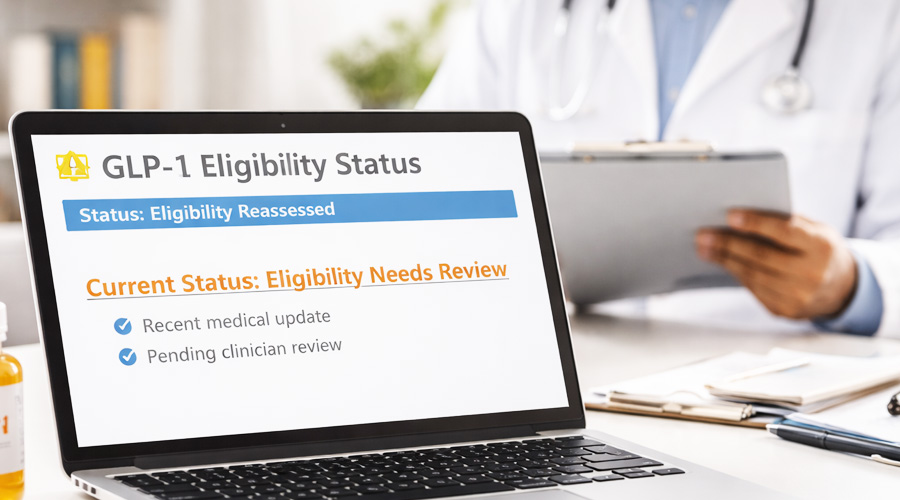
Eligibility in an online GLP-1 program can change at any time during treatment. If GLP-1 telehealth eligibility changes, the program may pause access, request updated information, or end participation after a licensed clinician completes an eligibility reassessment.
Online GLP-1 program ongoing eligibility requirements apply beyond initial approval. A GLP-1 program eligibility review during treatment may occur when required information is updated or reverified. Platforms manage account status, but licensed clinicians control eligibility decisions.
GLP-1 telehealth program participation is not guaranteed. Each licensed clinician eligibility reassessment is based on current information and program standards. Administrative actions, including paused eligibility status, reflect clinical determinations rather than platform discretion.
1. What Does Ongoing Eligibility Mean After Joining a GLP-1 Program?
Ongoing eligibility means approval is conditional, not permanent. Enrollment confirms that eligibility criteria were met at one point in time. Online GLP-1 programs require that certain standards continue to be met throughout participation. These standards are defined by clinical protocols and applicable telehealth regulations rather than platform preference.
Programs define eligibility as an active status based on verified information. That status may be reviewed at set intervals or when required data changes. A GLP-1 program eligibility review during treatment confirms whether current records still meet clinical and program rules.
Ongoing eligibility generally includes:
Accurate and current medical intake information
Compliance with program policies and verification steps
Continued alignment with clinician-determined standards
If these elements no longer align, eligibility may be reassessed by a licensed clinician.
2. Who Decides If Someone Is Still Eligible During the Program?
Licensed clinicians determine whether eligibility continues during a GLP-1 telehealth program. Platforms collect and organize information, but they do not make clinical approval decisions. Each clinical eligibility reassessment is based on current records and applicable medical standards.
Table 1. Platform and Licensed Clinician Responsibility Split
Platform responsibilities
Licensed clinician responsibilities
Manages account access and subscription status
Reviews submitted medical intake information
Collects updated medical intake information
Determines whether eligibility criteria are met
Communicates eligibility determinations to the account holder
Approves continuation, pause, or discontinuation under state and federal rules
This division ensures that eligibility decisions remain medical determinations rather than administrative preferences.
Important Clarification
Platform access and subscription status do not equal clinical approval. Eligibility determinations are made independently by licensed clinicians based on current information and applicable standards.
3. What Can Cause Eligibility to Be Reviewed Again in a GLP-1 Program?
A GLP-1 program eligibility review during treatment may occur when required information changes or must be reverified. Eligibility is tied to current records, not past approval. If those records no longer match program or clinician standards, reassessment may be required.
Table 2. Common Triggers for Eligibility Reassessment
Trigger event
Why review is required
Updates to medical intake information
New information may change how eligibility criteria apply
Expiration of required documentation or identity verification
Active records must remain valid under program rules
Changes in state location affecting clinician licensing
Clinician authority depends on state-specific licensing coverage
Incomplete responses during scheduled check-ins
Missing required information prevents confirmation of ongoing eligibility
A clinician-led eligibility review examines updated information against active eligibility rules (Cleveland Clinic, 2024). The platform documents the review process but does not determine the clinical outcome.
4. What Do Online GLP-1 Programs Typically Do If Eligibility Changes?
If eligibility changes, the platform applies administrative controls based on the clinician determination. The response reflects account status rules rather than automated approval systems. Actions are tied to the outcome of the licensed clinician eligibility reassessment.
Table 3. Clinician Determination and Platform Administrative Response
Clinician determination
Platform administrative response
Eligibility confirmed after reassessment
Maintains active account status and access
Eligibility requires additional documentation
Requests updated or missing documentation
Eligibility temporarily not confirmed
Places the account in a paused eligibility status and restricts ordering functions
Eligibility no longer meets standards
Closes participation and disables program access
These actions reflect how program eligibility requirements are enforced. The platform executes the status change, but the clinician decision determines whether participation may continue.
Important Clarification
Administrative account changes reflect a clinician’s determination. Platform systems apply the outcome, but they do not create or override clinical eligibility decisions.
5. What Administrative Steps Happen After Eligibility Status Is Updated?
When eligibility status is updated, the platform applies predefined account rules. These steps follow internal compliance policies and payment terms. They do not change the underlying clinical determination made by the licensed clinician.
Administrative steps may include:
Adjusting billing status in line with subscription terms
Pausing future pharmacy fulfillment requests
Issuing notices explaining account status changes
Documenting the eligibility decision in the user record
These actions manage program access and maintain program records. They do not independently restore or override eligibility. Continued participation depends on meeting current program eligibility requirements.
6. Does a Change in Eligibility Automatically End the Program?
A change in eligibility does not automatically end a GLP-1 telehealth program. Eligibility updates trigger review and administrative controls, but final status depends on a clinician-led reassessment. Some cases result in temporary pauses rather than permanent closure.
A status change does not automatically:
Cancel an account without documented review
Reverse prior clinical decisions without reassessment
Guarantee reinstatement after new information is submitted
Ensure continued pharmacy fulfillment
Each outcome reflects current eligibility standards and clinical judgment. GLP-1 telehealth program participation is not guaranteed, and continued access depends on meeting active requirements at the time of review.
Important Clarification
A paused or closed account does not represent an automated denial. Final eligibility status follows documented clinical reassessment, not billing or subscription mechanics.
7. Why Do Eligibility Rules Differ Between GLP-1 Telehealth Programs?
Eligibility rules differ because each program operates under its own compliance model and clinician network. While all programs rely on licensed clinicians, internal policies and documentation standards are not identical across platforms.
Variation may result from:
Differences in clinician group oversight and review protocols
State-specific licensing coverage and telehealth rules
Internal documentation and identity verification standards
Program-level compliance policies and risk controls
These differences affect how a GLP-1 program eligibility review during treatment is conducted. However, in every case, a clinician-led eligibility reassessment determines whether eligibility standards are met at the time of review. Clinicians must hold active licensure in the state where care is provided, and that licensing requirement can directly affect eligibility status (U.S. Department of Health & Human Services, Telehealth Guidance).
8. What Is Ultimately Determined by the Platform Versus the Licensed Clinician?
The platform and the licensed clinician have distinct authority within a GLP-1 telehealth program.
Table 4. Final Authority Split Between Platform and Licensed Clinician
Platform determines
Licensed clinician determines
Account status and access controls
Whether eligibility criteria are met at the time of review
Billing application under subscription terms
Whether participation may continue under clinical standards
Documentation flow and record keeping
Whether eligibility requires pause or discontinuation
Enforcement of internal compliance steps
Approval decisions under applicable state and federal rules
Eligibility in a GLP-1 telehealth program remains conditional and subject to periodic reassessment under applicable medical and telehealth regulations. Administrative systems implement decisions, but clinical authority defines whether participation may continue.
Important Clarification
Platform operations manage access and records. Licensed clinicians determine medical eligibility. These roles are separate and are governed by distinct legal and professional standards.
U.S. Department of Health & Human Services. Telehealth Guidance. https://telehealth.hhs.gov/
U.S. Department of Health & Human Services. Licensing Across State Lines. https://telehealth.hhs.gov/licensure/licensing-across-state-lines
Centers for Medicare & Medicaid Services. Telehealth Services Overview. https://www.cms.gov/medicare/coverage/telehealth
Federation of State Medical Boards. U.S. States and Territories Modifying Requirements for Telehealth. https://www.fsmb.org/advocacy/key-issues/telehealth/