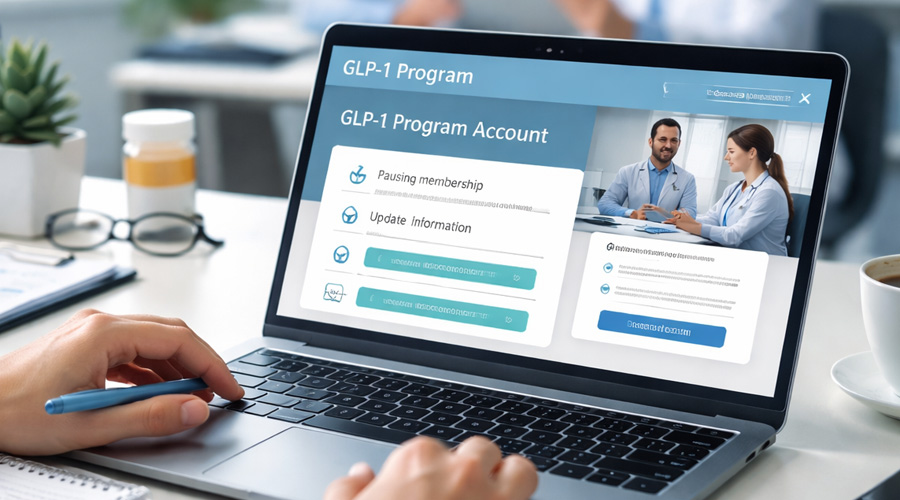
Administrative pauses or adjustments in online GLP-1 programs are widely misunderstood. This article explains how these processes actually work, what they change, and what they do not affect, before separating program operations from licensed clinician authority.
Online GLP-1 programs typically handle changes, adjustments, or pauses through defined administrative processes rather than medical decision-making. Requests to pause participation or adjust program status are reviewed within the platform’s operational rules, while licensed clinicians retain authority over all clinical determinations.
In many programs, these requests are submitted through an account dashboard or support system and routed for internal review. This review focuses on participation status, account access, and service continuity, not medication or treatment decisions.
How online GLP-1 programs handle pauses varies by provider, and operational flexibility supports enrollment status management. These processes do not guarantee clinical outcomes, continued eligibility, or treatment changes, which remain determined by licensed clinicians.
1. What Do “Changes,” “Adjustments,” or “Pauses” Usually Mean in Online GLP-1 Programs?
In online GLP-1 programs, these terms usually refer to administrative participation status, not clinical care. They describe how a platform manages access, account activity, and service timing under its program rules (NIH, 2023).
Common meanings include:
A temporary pause in active program participation while the account remains on record
An administrative adjustment to enrollment status or service access
A request to stop or resume non-clinical program services
These labels do not describe medication decisions, dosage changes, or medical judgments. Clinical care decisions remain separate and are made only by licensed clinicians.
Important Clarification. Administrative participation status reflects how a program manages access and services. It does not represent clinical approval, treatment authorization, or medical decision-making, which remain the responsibility of licensed clinicians.
2. Who Actually Controls Changes in Online GLP-1 Programs Versus Clinical Decisions?
Online GLP-1 programs separate administrative control from clinical authority by design. Platforms manage enrollment status, account access, and non-clinical services under their published program rules.
Table 1. Administrative Control Versus Licensed Clinician Authority
Program Operations (Administrative)
Licensed Clinician Authority (Clinical)
Manage enrollment status and participation records
Review medical intake information
Control account access and non-clinical services
Determine prescribing decisions
Process administrative pauses or adjustments
Decide whether treatment continues
Apply program rules and service limits
Assess clinical appropriateness
Licensed clinicians control all clinical decisions, including medical intake review, prescribing, and treatment continuation. Platforms do not override, direct, or guarantee clinician decisions.
This separation exists to meet regulatory requirements and clarify responsibility (Cleveland Clinic, 2024). Administrative changes affect program participation only, while clinical decisions remain independent and clinician-led.
3. What Information Is Typically Required to Request a Change or Pause?
Online GLP-1 programs typically require limited, non-clinical information to process a change or pause request. The purpose is to confirm account identity and determine how participation status should be updated.
Table 2. Information Reviewed for Administrative Change or Pause Requests
Information Typically Required
Information Not Reviewed or Required
Account identification details
Medical history updates
Type of administrative change requested
New medical intake information
Timing preferences for participation status
Medication details or dosage questions
Confirmation of account ownership
Clinical justifications or outcomes
Medical information is not evaluated as part of this administrative process (Mayo Clinic, 2024). Clinical intake data remains reviewed separately by licensed clinicians and is not re-assessed for participation changes.
Important Clarification. Submitting a request to pause or adjust participation does not reopen medical intake, update clinical records, or preserve eligibility. Clinical information is reviewed only within clinician-led care processes, not through administrative change requests.
4. How Are Change or Pause Requests Usually Reviewed and Handled Operationally?
Once submitted, change or pause requests are typically routed through the program’s administrative workflow. This workflow is designed to update participation status while maintaining accurate records and service boundaries.
Operational review typically includes:
Verification that the request aligns with the program’s published participation rules
Confirmation of the requested change type and effective timing
System updates to account status, access, or service scheduling
This review does not involve medical reassessment. Clinical oversight remains separate, and licensed clinicians are not required to approve administrative participation changes.
5. What Do Changes or Pauses Not Guarantee or Determine in These Programs?
Administrative changes or pauses do not guarantee continued eligibility, ongoing clinical care, or future treatment approval. They affect participation status only and do not alter how clinical decisions are made.
Table 3. What Administrative Changes Affect Versus What They Do Not Determine
Administrative Changes May Affect
Administrative Changes Do Not Affect
Participation status within the program
Clinical eligibility determinations
Access to non-clinical services
Prescribing or treatment approval
Timing of administrative services
Medical decision-making by clinicians
Account activity or service scheduling
Future clinical outcomes or care plans
Clinical determinations remain independent of administrative status. Licensed clinicians assess medical factors separately and are not bound by prior participation changes.
Important Clarification. A paused or adjusted program status does not reserve future care, lock in eligibility, or carry forward prior clinical decisions. All treatment determinations are made independently by licensed clinicians at the time of clinical review.
6. Why Do Online GLP-1 Programs Allow Operational Flexibility at All?
Operational flexibility exists to manage participation across changing schedules, service availability, and administrative capacity. Online GLP-1 programs are structured to handle pauses or adjustments without dismantling the overall account framework.
This flexibility commonly reflects:
The subscription-based design of many telehealth platforms
The need to align service access with administrative readiness
Variations in how programs define active versus inactive participation
These operational choices support record continuity and accuracy (NIH, 2023). They do not indicate clinical discretion or treatment intent, which remains under licensed clinician authority.
7. What Are Common Misunderstandings About Pausing or Adjusting Participation?
Pausing or adjusting participation is commonly misunderstood as a clinical action rather than an administrative process. In online GLP-1 programs, these processes are limited to program status and service access.
Common misunderstandings include:
Assuming a pause guarantees future treatment continuation or approval
Expecting paused participation to preserve prior clinical decisions
These assumptions are not supported by program structures. Clinical evaluations remain separate, and licensed clinicians reassess care independently of administrative participation status.
8. How Is Timing and Communication Typically Handled When a Change Occurs?
When a change or pause is processed, programs typically communicate updates through the same platform channels used for routine account notices. This helps keep participation records consistent and traceable.
Table 4. Scope of Administrative Communications During a Change or Pause
Communications Usually Include
Communications Do Not Include
Confirmation of administrative status changes
Medical advice or treatment guidance
Notices about when a change takes effect
Clinical decisions or prescribing intent
Updates visible within the account portal
Individualized clinician outreach
Standard system notifications
Guarantees about future care or eligibility
These communications document administrative status only. They do not convey medical decisions, treatment direction, or clinician intent.
Important Clarification. Platform messages and system notifications reflect administrative recordkeeping and timing only. They are not clinical communications and do not signal medical review, treatment approval, or clinician intent (Cleveland Clinic, 2024).
9. What Are the Boundaries Between Program Operations and Licensed Clinician Authority?
Online GLP-1 programs operate within defined boundaries that separate platform administration from medical decision-making. Programs manage accounts, participation status, and service access, but they do not control clinical care.
Licensed clinicians retain exclusive authority over medical intake review, prescribing, and treatment continuation. Program operations do not influence, replace, or guarantee clinical decisions.
This boundary defines the scope of administrative changes, adjustments, or pauses. Participation status can change, but clinical authority remains constant and independent.
Sources:
National Institutes of Health (NIH). Telehealth Services and Care Delivery Oversight. 2023.
Mayo Clinic. Telehealth: What It Is and How It Works. 2024. https://www.mayoclinic.org/healthy-lifestyle/consumer-health/in-depth/telehealth/art-20044878
Cleveland Clinic. Telehealth Program Structure and Clinical Responsibility. 2024.
U.S. Department of Health and Human Services (HHS). What Is Telehealth? 2023. https://telehealth.hhs.gov/patients/understanding-telehealth