This article explains the main questions people ask before choosing a GLP-1 program. It shows how those questions uncover differences in program structure, pricing, communication, medical review, and pharmacy fulfillment, while also clarifying which answers are public, which depend on clinician review, and which limits still remain.
The Short Answer
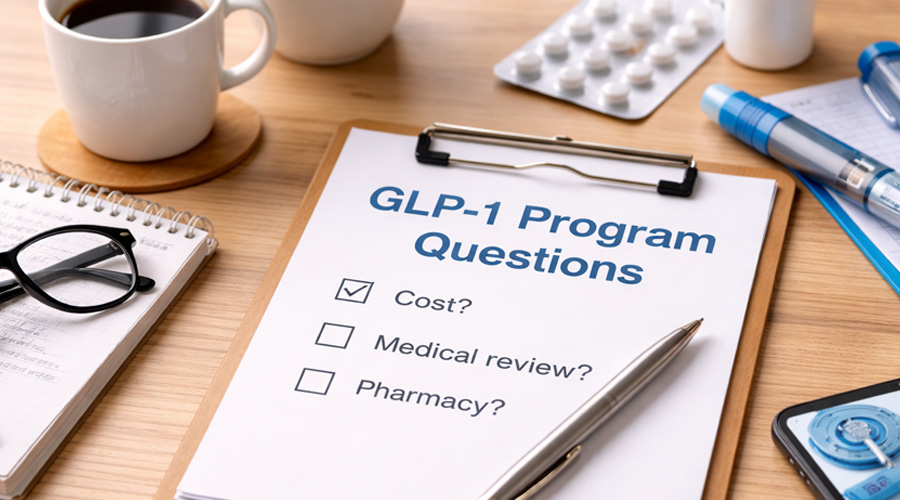
People choosing a GLP-1 program often ask about program structure, medical review, pricing, communication, and pharmacy fulfillment. These questions help explain how a GLP-1 program works, what steps are involved, and where one program may differ from another.
They also clarify what the platform manages and what a licensed clinician decides. That matters because program access, prescribing, and eligibility are not guaranteed by the platform itself.
In most cases, these questions help set expectations before enrollment. They do not identify a best provider or replace clinician review.
1. What Do People Usually Want to Know First Before Choosing a GLP-1 Program?
Most early questions focus on how the program is set up. People usually want to know what is included, who reviews medical information, how communication works, and how costs are presented.
Table 1. GLP1files Question Map by Decision Boundary
| Question Category | What It Usually Clarifies | Who Usually Controls It |
|---|---|---|
| Program structure questions | What the service includes, how access works, and what is disclosed upfront | The platform |
| Medical review questions | How intake is reviewed and where clinician judgment begins | The licensed clinician |
| Billing questions | How fees, renewals, and cancellation terms are presented | The platform |
| Fulfillment questions | How prescriptions move to pharmacy processing and shipping | The pharmacy and related operational partners |
These questions matter because they reveal the basic shape of the service before any medical decision is made. They also help separate platform features from clinician decisions, which are often discussed together but do not serve the same role.
2. Who Runs the Program, and What Is Decided by a Licensed Clinician?
This is one of the most important questions in the selection process. Many online GLP-1 programs combine platform services with clinical review, but those functions are not the same.
Table 2. Platform Functions and Licensed Clinician Decisions
| Area | Platform Role | Licensed Clinician Role |
|---|---|---|
| Intake and setup | Collects forms, identity details, and account information | Reviews medical intake information as part of clinical evaluation |
| Scheduling and messaging | Manages visit tools, reminders, and support channels | Uses clinical interactions to assess treatment appropriateness |
| Payment and billing | Processes fees, renewals, and account charges | Does not control platform billing structure |
| Prescribing and eligibility | Cannot guarantee approval or access | Decides eligibility, prescribing, and ongoing medical review |
| Pharmacy steps | May coordinate order flow and status updates | May send prescriptions for pharmacy fulfillment when appropriate |
A licensed clinician reviews medical intake information and decides whether treatment is appropriate. This means eligibility, prescribing, and ongoing medical decisions stay with the clinician. The platform may organize the process, but it does not guarantee approval, medication access, or a prescription.
Important Clarification. Platform enrollment, account setup, and payment access are not the same as clinical approval. Eligibility, prescribing, and ongoing treatment decisions are determined by licensed clinicians, not by the platform itself.
3. What Questions Do People Ask About the Medical Review Process?
Questions about medical review usually focus on what information is collected and how that information is used. People commonly ask what the intake includes, whether a video visit is required, and when a licensed clinician becomes involved.
This question group usually includes:
- health history and current medication review
- weight-related background and treatment goals
- identity checks and state availability rules
- lab work or photo requirements, if disclosed
- follow-up review before refill approval
These questions matter because medical review is the point where the program shifts from platform intake to clinician judgment. They also clarify that submitting forms does not by itself confirm eligibility, prescribing, or continued access to medication.
4. How Do People Ask About Messaging, Follow-Up, and Ongoing Support?
Questions about communication usually focus on access, response patterns, and what kind of follow-up the program includes. People commonly ask whether messaging is available, who responds, and how often check-ins take place after enrollment.
This question group usually includes:
- secure messaging with care teams or support staff
- follow-up visit frequency, if disclosed
- refill review steps and ongoing check-ins
- response windows for clinical or billing questions
- limits on after-hours or urgent communication
These questions matter because support features can look similar across programs while working very differently in practice. They also help show whether communication is clinical, administrative, or mixed, which affects how expectations are formed before enrollment. Telehealth visits, messages, and related health and billing information may be protected under HIPAA when handled by covered providers and compliant platforms (HHS, 2024).
5. What Do People Ask About Monthly Fees, Medication Charges, and Billing?
Questions about cost usually begin with structure, not price alone. People may ask what the monthly fee covers, whether medication is billed separately, and when charges begin or repeat.
Table 3. Common Billing Questions and What They Clarify
| Cost Area | What People Usually Ask | What the Answer Clarifies |
|---|---|---|
| Program fee | What does the monthly fee cover | Whether the fee covers platform access, clinician review, or both |
| Medication charges | Is medication billed separately | Whether drug cost is bundled or listed apart from program fees |
| Shipping and fulfillment | Are shipping charges included | Whether pharmacy and delivery costs appear as separate line items |
| Renewal timing | When do recurring charges begin or repeat | How billing cycles connect to refills or membership terms |
| Cancellation and refunds | When can billing stop and are refunds disclosed | What limits apply to cancellation cutoffs and posted refund terms |
These questions matter because two programs can appear similar while using very different billing models. They also help clarify whether listed costs reflect platform access, clinician review, medication, or pharmacy fulfillment, which are not always bundled together in the same way.
6. What Questions Come Up About Pharmacy Fulfillment and Medication Sourcing?
Questions about fulfillment usually focus on where medication comes from and how orders move after prescribing. People usually ask which pharmacy fills the prescription, whether shipping is included, and how refill timing is handled.
This question group usually includes:
- partner pharmacy arrangements
- pharmacy fulfillment after clinician approval
- shipping method and delivery timing ranges
- refill processing and order status updates
- whether compounded medication is disclosed
These questions matter because pharmacy fulfillment begins after prescribing, not before it. They also help clarify that medication sourcing, shipping, and refill processing may involve separate parties, separate timelines, and separate disclosures from the platform itself. FDA states that compounded drugs are not FDA-approved and are not reviewed by the agency for safety, effectiveness, or quality before marketing (FDA, 2025).
Important Clarification. Pharmacy fulfillment is not the same as prescribing. A licensed clinician decides whether a prescription is issued, while pharmacy sourcing, shipping, and refill handling may involve separate pharmacy partners and separate operational steps.
7. What Do These Questions Actually Clarify, and What Do They Not Guarantee?
This question sits near the center of the review process. Many people use early research questions to understand what a program offers, but those questions do not settle medical or fulfillment outcomes.
Table 4. What Pre-Enrollment Questions Can Clarify and What They Cannot Guarantee
| Question Area | What These Questions Can Clarify | What They Do Not Guarantee |
|---|---|---|
| Program structure | How the service is organized and what parts are disclosed upfront | That the structure will lead to approval or medication access |
| Communication and billing | How messaging, fees, and renewals are described | That support response times or billing outcomes will stay the same |
| Medical review | When clinician review enters the process | That form submission confirms eligibility or prescribing |
| Pharmacy involvement | Which parts may depend on outside pharmacies | That shipping speed, refill timing, or stock will be unchanged |
| Public disclosures | What the platform says before enrollment | That all later terms, limits, or requirements are fully resolved |
They do not guarantee eligibility, prescribing, refill approval, shipping speed, or continued access to medication. Those outcomes may depend on clinician judgment, pharmacy operations, state rules, and changing program terms that are not fully resolved by pre-enrollment research alone. FDA also states that compounded drugs are not FDA-approved and are not reviewed for safety, effectiveness, or quality before marketing (FDA, 2026).
Important Clarification. Pre-enrollment questions can explain how a program is described and where key steps occur. They do not determine clinical eligibility, confirm prescribing, or resolve pharmacy fulfillment outcomes in advance.
8. Why Do Answers to the Same Questions Vary From One Program to Another?
The same question can lead to different answers because online GLP-1 programs are not built in exactly the same way. Programs may use different clinicians, support models, pharmacies, billing structures, and state coverage rules.
Table 5. Why Answers Vary Across Online GLP-1 Programs
| Area of Variation | What May Differ Across Programs | Why the Answer Changes |
|---|---|---|
| Medical review | Intake steps, visit format, and refill review rules | Programs use different clinical workflows and state coverage rules |
| Follow-up and support | Check-in frequency, messaging access, and support channels | Programs define ongoing contact in different ways |
| Billing structure | Bundled fees, separate medication charges, and renewal timing | Programs group or separate costs differently |
| Pharmacy fulfillment | Partner pharmacy setup, order flow, and refill handling | Fulfillment may involve different pharmacy arrangements |
| Team presentation | How support staff and licensed clinicians are described | Programs present care roles with different levels of detail |
These differences matter because surface-level language can look similar across program websites. Better questions help reveal where the underlying structure changes, which is more useful than relying on broad marketing terms or assuming that every program follows the same model.
9. How Do These Questions Help Define Expectations Without Identifying a Best Choice?
At this stage, questions are most useful when they clarify scope, roles, and limits. They help people understand how a GLP-1 program is organized before any clinician decision, pharmacy step, or billing cycle moves forward.
This question process can help clarify:
- what the platform presents publicly
- where clinician review begins and ends
- how support, billing, and fulfillment are described
- which details may vary by state or pharmacy
- what is not promised before enrollment
It does not identify a best program, confirm medical eligibility, or settle treatment access. Licensed clinicians make prescribing decisions, and pharmacy fulfillment remains separate from the early research questions people ask before choosing a program.
Important Clarification. Early research questions can clarify how an online GLP-1 program is structured and what it publicly discloses. They do not determine medical eligibility, replace clinician review, or establish a best choice across programs.
Sources:
- FDA. 2025. Compounding and the FDA: Questions and Answers.
- FDA. 2026. Understanding the Risks of Compounded Drugs.
- HHS. 2024. Privacy Laws and Policy Guidance.