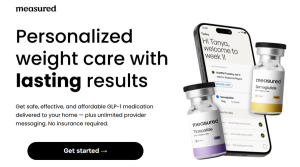
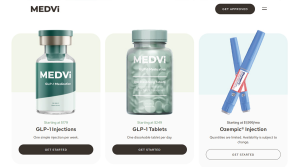
TMates presents itself as a storefront-style telehealth platform where medication programs and flat prices are displayed before any health intake occurs. Visitors can select from GLP-1 and other prescription weight-loss products prior to clinician review. The website describes mail delivery through unnamed pharmacies and markets nationwide access to U.S.-based doctors across all 50 states.
This page contains affiliate links. GLP1files may receive compensation if enrollment occurs through the referenced links. This relationship does not influence editorial analysis, and all information is presented for independent informational purposes only.
This summary highlights the main structural points people often look for when comparing GLP-1 telehealth programs.
Medication programs and flat prices are visible before intake, reflecting a storefront-style model rather than post-review cost disclosure.
Program selection happens before any health information is submitted, separating product choice from later clinician evaluation.
Clinical authority remains fully downstream, with licensed clinicians deciding eligibility and prescribing after intake review.
Pharmacy partners are referenced but not named publicly, placing preparation, compounding, and shipping outside visible platform control.
The catalog includes non‑GLP‑1 weight‑loss medications, positioning TMates as a broader prescription storefront rather than a GLP‑1‑only program.
Reported friction most often centers on billing clarity and delivery timing, shaped by the gap between upfront pricing and later clinical and pharmacy steps.
1. TMates Review Overview: What This Program Is and Who It’s For
TMates follows a commerce-first telehealth sequence where medication programs are browsed and selected before intake, followed by clinician review and pharmacy fulfillment.
This review documents how pricing is shown before medical evaluation, how intake and review occur later, and where administrative versus clinical control applies.
Eligibility and prescribing decisions are made by licensed clinicians after intake, while the TMates platform manages storefront access, payment processing, and coordination.
TMates is commonly researched by purchase-stage users because product pricing and medication options are visible upfront, with approval determined only after review.
2. TMates at a Glance: Cost, Medications, and Telehealth Model
Table 1. TMates Program Snapshot
Category
How TMates Is Structured
Program type
Product-catalog telehealth platform where medication programs are selected before intake, followed by online assessment, clinician review, and pharmacy fulfillment.
States served
No centralized list of supported states is published, and state availability is not itemized prior to intake.
Medical review
Prescribing decisions are made by licensed clinicians after intake submission and are separate from product selection and payment.
Medications offered
GLP-1 medications are presented alongside other prescription weight-loss products without guaranteed access to specific brands.
Pricing model
Out-of-pocket, flat pricing is displayed on medication product pages before intake or clinician review.
Pharmacy sourcing
Pharmacy fulfillment is coordinated through third-party licensed pharmacies that are not publicly identified.
Shipping method
Medications are delivered by the dispensing pharmacy only after clinician authorization and fulfillment processing.
Certifications
No third-party certifications or accreditation badges are highlighted on public pages.
3. What Is TMates? Telehealth Weight Loss Program Explained
TMates functions as a product-catalog telehealth storefront where prescription weight-loss medications are presented for selection before any medical intake occurs. The platform centers on browsing named medication programs with listed prices, while medical authority remains separate from storefront access. All services are delivered online, without in-person clinical care.
Health information is collected only after a program is selected from the catalog, and review occurs downstream through licensed clinicians. Prescriptions are issued solely based on clinician judgment and are not guaranteed by storefront selection, pricing visibility, or payment activity.
Key structural elements of how TMates operates:
A visible medication catalog that includes GLP-1 and non-GLP-1 prescription weight-loss products.
Program selection that occurs before completion of any online health intake.
Clinician review that determines eligibility and prescribing independent of storefront choices.
Platform control limited to account access, billing status, and administrative coordination.
Pharmacy preparation and compounding handled by third-party licensed pharmacies not identified publicly.
Shipping timelines determined after clinician authorization by pharmacy processing rather than platform sequencing.
Table 2. When Key Decisions Occur in TMates’ Intake-Led Program
Program Stage
What Actually Happens at This Stage
Who Controls the Outcome
Before intake
Medication programs and flat storefront prices are displayed and can be selected before any health information is entered.
The platform controls catalog visibility and price display, without making any medical determinations.
During intake review
Health information submitted after product selection is reviewed to determine whether prescribing is appropriate.
Licensed clinicians independently assess eligibility and make prescribing decisions.
After approval
Authorized prescriptions are transmitted to dispensing pharmacies for acceptance and preparation.
Clinicians authorize prescriptions, while pharmacies decide whether and how to dispense.
After fulfillment
Medications are packaged and shipped once pharmacy processing is complete.
Dispensing pharmacies control shipping timing and delivery logistics.
This section clarifies where the TMates platform’s role ends, based on how the program publicly describes pricing, intake flow, clinician review, and pharmacy coordination.
Medical decisions
Eligibility for treatment is determined by licensed clinicians after reviewing submitted intake information.
Prescription approval or denial is decided by clinicians and is not controlled by the TMates platform.
Medication selection, including brand-name versus compounded formulations, is based on clinician judgment.
Dosing decisions, changes, or continuation are made by clinicians rather than automated platform rules.
Approval is not described as automatic or algorithmic on public TMates pages.
Clinical scope
The program does not operate as a primary care practice or provide comprehensive medical management.
Non–weight-loss conditions are not described as being treated through the TMates platform.
In-person visits, physical examinations, urgent care, and emergency services are not offered.
Pharmacy control
TMates does not own or operate a dispensing pharmacy according to public disclosures.
Pharmacy partners are referenced but not identified by name on the website.
Medication preparation, compounding decisions, inventory availability, and shipping timelines are controlled by licensed pharmacies.
Regulatory compliance for compounded medications is managed at the pharmacy level, not by the platform.
Continuity, communication, and billing
Ongoing communication is described as platform-based rather than in-person or real-time clinical access.
Continued access depends on account status and program terms rather than guaranteed clinical continuity.
Billing, renewals, pauses, or cancellations are handled administratively through the platform.
Charges are tied to product selection and account activity, not to approval outcomes or delivery timing.
Upfront product pricing combined with downstream clinical and pharmacy control means approval, fulfillment timing, and billing outcomes can vary by case.
5. How TMates Works: Sign-Up, Medical Review, and Delivery
Progress within the TMates program is triggered by specific administrative, clinical, and pharmacy actions rather than time elapsed or activity alone. Platform processes, clinician decisions, and pharmacy fulfillment are controlled by different parties. As a result, payment, approval, and delivery do not always move together.
Table 3. What Triggers Progress, Delays, and Stops in the TMates Program
Process question
What triggers it
Who controls it
What does not trigger it
What starts billing
Selection of a medication program from the storefront catalog and activation of payment.
The platform controls billing based on storefront selection and account status.
Clinician review or pharmacy shipment does not initiate billing.
What moves the order forward
Prescription authorization following clinician review of intake submitted after product selection.
Licensed clinicians determine whether an order advances medically.
Storefront payment alone does not move an order into pharmacy processing.
What causes delays
Time required for clinician evaluation, pharmacy preparation, or medication availability.
Licensed clinicians and dispensing pharmacies control these steps.
Completing intake or selecting a product does not eliminate delays.
What stops the process
Non-approval by a clinician, pharmacy inability to dispense, or account status changes.
Clinicians and pharmacies determine medical or dispensing stops.
Elapsed time or inactivity alone does not automatically stop processing.
Payment activity reflects administrative access and does not indicate that a prescription has been approved.
Review timelines vary because clinical evaluation and pharmacy preparation occur outside platform control.
Account status can remain active even when clinical or pharmacy steps are pending.
Fulfillment timing depends on pharmacy processing after clinician authorization, not on platform checkout speed.
Legitimacy within the TMates program is positioned through marketing claims made at the storefront stage, while verification and decision-making occur later through clinicians and pharmacies.
How legitimacy is established at TMates
Medication programs and flat prices are presented before intake, reflecting marketing emphasis on transparency around cost rather than confirmed medical access.
Prescribing authority is held by licensed clinicians who review intake information after product selection and payment, independent of storefront claims.
Pharmacy fulfillment is handled by third-party licensed pharmacies, which are referenced in general terms but not named on public pages.
Compounded medications, when involved, are described as prepared and dispensed under pharmacy regulatory oversight rather than platform supervision.
Claims such as nationwide access or “no hidden fees” appear in marketing language, while detailed licensure listings and price component breakdowns are not centralized publicly.
Legitimacy in this system depends on the separation between marketing-facing storefront information and downstream clinical and pharmacy-controlled verification.
FAQ Spotlight: How TMates frames legitimacy
Upfront storefront pricing and access claims establish initial trust signals, while licensed clinician review and pharmacy-controlled fulfillment provide the verification steps that occur only after intake.
TMates presents a multi‑product pharmacy catalog that includes GLP‑1 medications alongside other prescription weight‑loss options before intake. Product names and program labels are visible upfront, but prescribing decisions occur only after licensed clinician review and are not guaranteed by catalog selection.
Medication access is shaped by several factors decided after intake review:
Clinician review determines whether prescribing is appropriate and which medication type is authorized.
State licensing rules influence which prescribing options can be offered through the platform.
Pharmacy availability at the time of approval affects whether a listed program can be dispensed.
Brand‑name versus compounded formulation is decided after review and may differ from catalog labeling.
Table 4. TMates GLP-1 Medication Options
Medication type
Example products
Brand or compounded
Regulatory status
Determined by
GLP-1 agonist
Semaglutide
Compounded or brand-name
FDA-approved active ingredient; compounded formulations are not FDA-approved
Licensed clinician
Dual GLP-1/GIP agonist
Tirzepatide
Compounded or brand-name
FDA-approved active ingredient; compounded formulations are not FDA-approved
Licensed clinician
FAQ Spotlight: Is a specific medication or brand guaranteed on TMates?
Catalog product names do not guarantee a specific medication or formulation, as final prescribing decisions are made by licensed clinicians after intake review.
8. TMates Cost: Quick Answers
Is this monthly or one-time? TMates presents pricing as flat, per-product amounts tied to individual medication programs rather than a clearly defined recurring membership.
When does billing start? Billing is initiated when a medication program is selected from the catalog and payment is activated through the storefront.
What does the payment cover? Public pages link payment to the selected product listing and platform coordination, but do not fully itemize medication, review, or support components.
Is medication included? Medication dispensing depends on clinician authorization and pharmacy fulfillment, and public pricing does not consistently clarify inclusion versus separate handling.
FAQ Spotlight: Are there hidden fees?
TMates uses “no hidden fees” language, while public pages do not always specify what each listed program price includes or excludes before intake and pharmacy dispensing.
TMates provides access through an online-only platform that coordinates intake, clinician review, and pharmacy fulfillment. The platform manages administrative flow, while medical decisions remain with licensed clinicians. Support is described primarily in terms of coordination rather than ongoing clinical care.
Online access is delivered entirely through a web-based platform without in-person visits or physical locations.
Portal-based communication is used for intake completion, account management, and administrative updates.
Licensed clinicians review submitted information and make prescribing decisions independent of platform operations.
Pharmacy-dependent fulfillment means preparation and shipping timelines vary based on dispensing pharmacy processes.
Program terms govern continuation, pauses, or changes rather than automatic ongoing clinical engagement.
What Support Typically Covers
Account setup, payment processing, and access to selected medication programs.
Coordination of intake submissions between the platform and reviewing clinicians.
Transmission of approved prescriptions to dispensing pharmacies for fulfillment.
What TMates Support Does Not Cover
Ongoing medical monitoring, treatment adjustments, or direct clinical follow-up.
In-person consultations, urgent care services, or emergency medical support.
Resolution of pharmacy-controlled delays, inventory issues, or shipping carrier problems.
10. TMates User Reviews and Complaints: What Users Commonly Report
Public TMates reviews often reflect how expectations formed at the storefront stage compare with what is later determined through clinician review and pharmacy fulfillment. Feedback tends to focus on how product selection and pricing visibility interact with downstream medical and dispensing decisions, rather than on clinical outcomes or safety results.
Common Positive Themes in Reviews
Storefront-style product pages and upfront pricing are frequently described as easy to review before intake.
Fully online account management is often cited as the primary way enrollment and follow-up are handled.
Portal-based clinician communication is commonly mentioned once intake moves into formal medical review.
Review steps are described as progressing from intake submission to clinician decision and pharmacy handoff.
Process clarity is sometimes reported as improving after clinical review defines what can proceed.
Common Complaints and Friction Points
Billing timing can feel unclear when charges begin at product selection rather than after clinician approval.
Portal response expectations sometimes differ while intake is awaiting clinician review.
Prescribing outcomes may not align with the specific product name selected in the catalog.
Pharmacy preparation delays are reported after approval, before medication enters shipping.
Delivery timing depends on pharmacy processing and carrier handoff, not storefront checkout completion.
Why TMates Reviews Often Vary
Reviews vary because product choice and pricing occur before intake, while clinicians and pharmacies later determine authorization and fulfillment under separate control.
Table 5. Sources of Review Variation
Source of variation
Why experiences differ
Medication format
Brand-name versus compounded dispensing can change pharmacy preparation steps and fulfillment timelines.
Prior GLP-1 experience
Familiarity with telehealth affects expectations when product selection occurs before medical review.
Support needs
Differences in billing questions or delivery coordination influence how often platform support is involved.
FAQ Spotlight: What types of complaints are most commonly reported?
Complaints most often relate to billing timing, portal communication, and pharmacy fulfillment following storefront selection, with fewer reviews focused on clinical safety.
Safety in the TMates program is defined by how medical authority and medication handling are separated from the platform’s administrative role.
How safety oversight works at TMates
Medical decisions Licensed clinicians determine eligibility, prescribing, and continuation based on intake information, without platform involvement in clinical judgment.
Medication handling Third-party licensed pharmacies prepare, label, compound when applicable, and ship medications, with timing and handling outside platform control.
Care boundaries Ongoing monitoring, in-person care, emergency services, and continuous clinical management are not described as part of the program.
Under this structure, safety responsibility sits with clinician review and pharmacy compliance, while the TMates platform remains administrative.
FAQ Spotlight: How is safety handled in the TMates program?
Clinician-led intake review combined with pharmacy-controlled preparation and shipping defines how safety is handled, with the platform coordinating rather than directing care.
12. How Eligibility Decisions Work at TMates
Eligibility at TMates is determined only after intake submission and licensed clinician review, while product pages show programs and prices before any eligibility assessment is completed.
Before intake: Medication programs can be viewed and selected, but no clinical eligibility decision is made at this stage, and the platform controls only access and billing mechanics.
During review: Submitted intake information is evaluated for prescribing appropriateness, and no approval is automatic because licensed clinicians control the decision.
After approval: Prescriptions can move to pharmacy dispensing, but ongoing access depends on clinician decisions and pharmacy ability to fulfill.
Eligibility is not determined by choosing a program or completing checkout.
Submitting intake initiates clinician review, and approval is not guaranteed.
FAQ Spotlight: Does completing the intake mean I will qualify at TMates?
Completing the intake enables clinician review, but approval is not guaranteed because licensed clinicians make eligibility and prescribing decisions after evaluation.
13. Who Decides What at TMates? Control, Variability, and What Can Change
TMates separates control between a storefront-style platform and downstream clinical and pharmacy decision-makers. Because medication programs and prices appear before intake, later decisions can change what happens next.
Controlled by the TMates platform
Visibility of catalog medication programs and listed prices before any intake review occurs.
Account access, payment processing, and billing status tied to program selection and platform terms.
Intake routing, portal messaging, and administrative coordination with clinicians and dispensing pharmacies.
Controlled by licensed clinicians
Whether prescribing is appropriate after reviewing submitted intake information.
Which medication type and formulation is authorized, including brand-name or compounded options.
Decisions to approve, decline, or discontinue prescribing based on clinical judgment.
What can vary by case
Whether the selected catalog program results in a prescription after clinician review.
Pharmacy fulfillment timing after authorization due to preparation steps and inventory availability.
Whether a pharmacy can dispense a given formulation when partners are not publicly identified.
What Is Typically Clear Before Sign-Up
Before enrollment, it is generally clear which parts of the program are administrative versus clinical.
Prescription approval is determined by a licensed clinician, not the TMates platform.
The program uses out-of-pocket pricing without insurance involvement, and costs may change over time.
A detailed online health intake is required before clinician review occurs.
Billing and cancellation follow the terms published on the TMates website.
FAQ Spotlight: Is TMates worth it?
This review does not assess value or suitability, and instead documents how costs, approval authority, and operational variability are structured so program differences can be understood.
This section consolidates the operational and structural facts documented throughout the review, without offering conclusions or recommendations.
The TMates platform manages account access, billing mechanics, and coordination, but does not make medical or pharmacy decisions.
Licensed clinicians hold authority over eligibility assessment, prescribing decisions, and whether medication is approved.
Prescriptions are issued only after clinician review, regardless of product selection or payment timing.
Licensed pharmacies control medication preparation, compounding where applicable, shipping, and delivery timelines.
The program uses out-of-pocket pricing with costs displayed upfront, while final expenses may vary by case.
Variability arises from clinician review outcomes, pharmacy availability, and program terms rather than platform promises.
Structural variability is inherent to how the TMates program is designed, rather than individual behavior or expected outcomes.
FAQ Spotlight: What is this review meant to help with?
This review explains how the TMates system works, what is disclosed before intake, and where limits or variability apply, without advising participation or assessing results.
This review is based on publicly available information describing how the TMates program operates at the time of writing.
Official TMates website content, including product pages, pricing language, FAQs, and published terms.
Public state licensing databases for clinicians and pharmacies, when accessible for verification context.
FDA resources addressing GLP-1 medications, active ingredients, and distinctions related to compounded formulations.
Independent third-party consumer review platforms and publicly available user feedback discussing program operations.
Program details may change as TMates updates disclosures or modifies its platform. All medical decisions referenced in this review are made by licensed healthcare providers, not by the publisher.