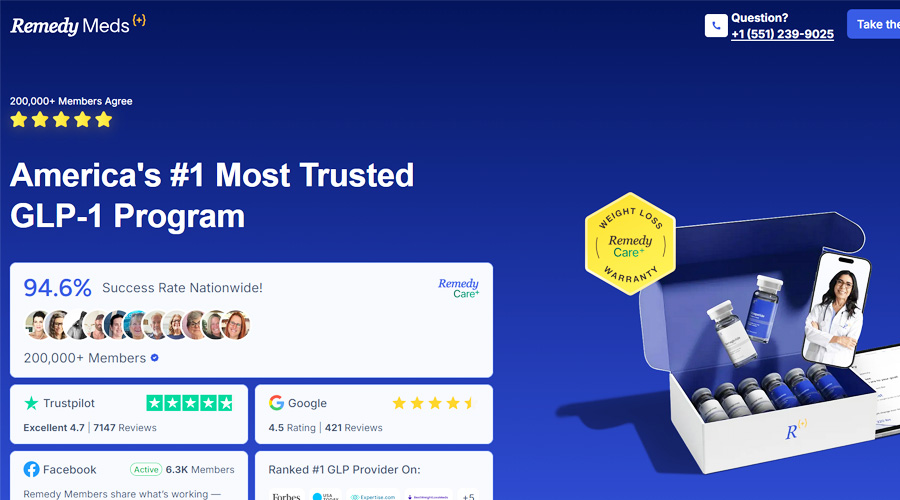
RemedyMeds defines its GLP-1 telehealth program as a subscription-based service centered on an online intake and clinician evaluation. Public pages emphasize compounded semaglutide and tirzepatide, note that pricing details are not fully shown upfront, and reference mail-order delivery through unnamed partner pharmacies, with additional details provided during enrollment.
This summary outlines the structural features that tend to matter most when GLP-1 telehealth programs are compared.
RemedyMeds uses progressive disclosure during enrollment, meaning pharmacy partners, medication handling, and some cost components are not fully visible before account creation.
The program relies on a membership billing model that activates before prescription approval, separating payment timing from clinical decisions.
Eligibility and prescribing authority sit entirely with licensed clinicians, with no platform-level pre-screening or automated approval step.
Medication fulfillment depends on unnamed partner pharmacies, limiting public verification of sourcing until after enrollment progresses.
Public feedback patterns show recurring friction around membership billing timing and portal communication, instead of disputes over clinical judgment.
Differences in approval outcomes, shipment timing, and total charges arise from sequential handoffs between platform, clinician, and pharmacy, not from a single controlling system.
1. RemedyMeds Review Overview: What This Program Is and Who It’s For
RemedyMeds operates as a membership-based GLP-1 telehealth program that begins with online intake, followed by clinician review and prescription fulfillment through unnamed partner pharmacies.
This review documents how RemedyMeds presents enrollment steps, pricing visibility, medication access, clinician authority, and platform limits using only publicly available disclosures.
Eligibility and prescribing decisions are determined by licensed clinicians, while the RemedyMeds platform manages intake processing, billing structure, and coordination with pharmacies.
RemedyMeds is commonly researched at the decision stage because medication costs and pharmacy details are revealed gradually instead of fully displayed before account creation.
2. RemedyMeds at a Glance: Cost, Medications, and Telehealth Model
Table 1. RemedyMeds Program Snapshot
Category
How RemedyMeds Is Structured
Program type
Membership-based GLP-1 program where administrative access begins first and clinical steps unfold during enrollment.
States served
State availability is not shown at entry and is clarified later based on clinician licensure during intake review.
Medical review
Clinical decisions occur after enrollment information is submitted and reviewed by a licensed clinician.
Medications offered
GLP-1 medications are referenced broadly, with specific formulations identified after clinician review and pharmacy coordination.
Pricing model
Out-of-pocket membership pricing activates with enrollment, while medication-related costs resolve later in the process.
Pharmacy sourcing
Pharmacy involvement becomes visible during enrollment, with fulfillment partners identified after prescription authorization.
Shipping method
Medication delivery occurs only after approval and pharmacy acceptance, with timing dependent on fulfillment processing.
Certifications
External certification or accreditation details are not emphasized during the initial enrollment stages.
Trustpilot rating
4.7 stars out of 5.0 stars based on 9,997 reviews as of January 8, 2026.
3. What Is RemedyMeds? Telehealth Weight Loss Program Explained
RemedyMeds presents itself as a membership-based telehealth platform in which additional program details surface as the online intake process progresses. The service is delivered online instead of through in-person clinic visits. Medical decisions are made by licensed clinicians, not by the platform.
Intake information is collected through a standardized questionnaire and routed for clinician evaluation. A prescription is issued only when a clinician completes review and authorizes it.
Key structural elements of how RemedyMeds operates include:
The RemedyMeds portal collects health history in a single intake before any clinician review begins.
Licensed clinicians evaluate intake submissions and decide whether prescribing is appropriate for the case.
Program access is organized as a recurring membership, separate from prescription approval decisions.
Pharmacy fulfillment is handled through partner pharmacies that RemedyMeds references but does not name publicly.
Medication preparation and shipping are completed by the dispensing pharmacy after prescription authorization.
Information about pharmacy sourcing and some cost components may be disclosed later in enrollment.
Table 2. When Key Decisions Occur in RemedyMeds’s Intake-Led Program
Program Stage
What Actually Happens at This Stage
Who Controls the Outcome
Before intake
General program information is displayed, with limited visibility into medication sourcing and pharmacy participation.
RemedyMeds controls how and when high-level program details are presented before enrollment begins.
During intake review
Submitted health information is evaluated to determine whether prescribing is clinically appropriate.
Licensed clinicians independently control eligibility assessment and prescribing decisions.
After approval
An authorized prescription is transmitted to a partner pharmacy for dispensing consideration.
Clinicians authorize prescriptions, while pharmacies decide whether and how dispensing proceeds.
After fulfillment
Medication is shipped, and continued access follows membership billing and platform administration rules.
Pharmacies manage shipment logistics, and RemedyMeds manages ongoing membership access.
4. What RemedyMeds Does Not Manage or Control
This section clarifies where RemedyMeds’ platform role ends, based on how the program describes pricing, intake, clinician review, and pharmacy coordination.
Medical decisions
Eligibility determinations are made by licensed clinicians after reviewing submitted intake information, not by the RemedyMeds platform.
Prescription approval or denial depends on clinician judgment instead of automated rules or platform-level criteria.
Medication selection, including whether a compounded formulation is used, is decided by the prescribing clinician.
Dosing, adjustments, and continuation decisions fall under clinician discretion and are not directed by the platform.
Clinical scope
The program does not function as a primary care service or replace an ongoing relationship with an in-person clinician.
Care outside GLP-1 weight loss, including management of unrelated conditions, is not described as part of the program.
In-person visits, physical exams, urgent care, and emergency services are not offered through the platform.
Pharmacy control
RemedyMeds does not own or operate a pharmacy and instead coordinates prescriptions with third-party partners.
Pharmacy partners are referenced in general terms and are not publicly named on core program pages.
Medication preparation, inventory availability, compounding processes, and shipping timelines are controlled by the dispensing pharmacy.
Regulatory compliance related to compounded medications is handled by the licensed pharmacy, not the platform.
Continuity, communication, and billing
Ongoing access is structured around a recurring membership instead of guaranteed long-term clinical continuity.
Communication is described as platform-based instead of live, in-person, or on-demand clinical interaction.
Billing, renewals, pauses, and cancellations follow platform policies and are not contingent on medication approval or shipment outcomes.
These boundaries reflect a structure where progressive disclosure during enrollment and separated clinical authority contribute to variation in approval, timing, billing, and fulfillment.
5. How RemedyMeds Works: Sign-Up, Medical Review, and Delivery
Progress inside the RemedyMeds program occurs when specific conditions are met instead of through elapsed time or payment alone. Medical decisions and fulfillment steps are handled by different parties, which means advancement depends on multiple independent actions.
Billing, clinical review, and pharmacy processing operate on separate tracks. As a result, approval, shipment, or pauses can occur without moving every part of the program forward at the same time.
Table 3. What Triggers Progress, Delays, and Stops in the RemedyMeds Program
Process question
What triggers it
Who controls it
What does not trigger it
What starts billing
Activation of membership access during enrollment, which enables administrative use of the platform.
RemedyMeds controls when membership access becomes active.
Prescription authorization or pharmacy shipment does not initiate membership activation.
What moves the order forward
Completion of clinician review that results in a prescription being authorized for fulfillment.
Licensed clinicians control whether prescribing advances to the pharmacy stage.
Active membership status alone does not release prescriptions for dispensing.
What causes delays
Handoffs between intake routing, clinician availability, and pharmacy preparation after authorization.
Clinicians and pharmacies control review pace and preparation capacity.
Enrollment completion does not remove downstream review or fulfillment bottlenecks.
What stops the process
Structural breakpoints such as clinical non-approval, pharmacy inability to dispense, or membership termination.
Clinicians, pharmacies, or the platform depending on where the sequence ends.
Prior progress through earlier stages does not ensure continuation.
Membership charges can begin before any prescription is approved because billing is tied to platform access, not medical outcomes.
Review backlogs or pharmacy inventory limitations can delay progress even when intake information is complete.
Ongoing billing may continue during pauses caused by clinical or fulfillment factors unless membership status changes.
Fulfillment timelines differ because pharmacies operate independently from the platform and clinician review process.
6. Is RemedyMeds Legit? How Legitimacy Is Established
Legitimacy in the RemedyMeds program emerges through how enrollment unfolds, with verification increasing as membership access, clinician review, and pharmacy fulfillment occur in sequence instead of all at once.
Trustpilot rating: 4.7 stars out of 5.0 stars based on 9,997 user reviews as of January 8, 2026.
How legitimacy is established at RemedyMeds
Program participation begins with membership enrollment, after which more specific medication, pharmacy, and handling details become visible during subsequent steps.
Licensed clinicians independently review intake information and make eligibility and prescribing decisions after enrollment information is submitted.
Pricing is framed around membership access, while medical approval and medication fulfillment remain separate processes controlled outside the platform.
Pharmacy fulfillment occurs through licensed partners, with dispensing and regulatory compliance providing downstream validation once prescriptions are authorized.
Compounded medications are referenced as potential options, with formulation determined later through clinician judgment and pharmacy coordination instead of upfront program guarantees.
External certifications or accreditation markers are not emphasized early, with operational validation instead tied to clinician review and licensed pharmacy involvement.
Under this structure, legitimacy depends on how clinician authority and pharmacy licensure intersect with progressive enrollment disclosure, instead of on complete verification before intake completion.
FAQ Spotlight: How RemedyMeds frames legitimacy
RemedyMeds presents legitimacy as developing through membership enrollment, clinician review, and pharmacy fulfillment, with clarity increasing as each stage of the program is reached.
7. What Medications Does RemedyMeds Prescribe?
Medication access through RemedyMeds is determined following licensed clinician review and is not preselected or guaranteed through platform enrollment.
Medication access is shaped by several factors decided after intake review:
Clinician review determines whether any GLP-1 medication is appropriate based on submitted health information.
State licensing rules limit which medications may be prescribed depending on clinician authorization and jurisdiction.
Pharmacy availability influences which formulations can be dispensed at the time of prescription approval.
Brand-name versus compounded determinations are made by clinicians in coordination with pharmacy sourcing constraints.
Table 4. RemedyMeds GLP-1 Medication Options
Medication type
Example products
Brand or compounded
Regulatory status
Determined by
GLP-1 injection
Semaglutide
Compounded
Compounded medication
Licensed clinician
GLP-1 injection
Tirzepatide
Compounded
Compounded medication
Licensed clinician
FAQ Spotlight: Is a specific medication or brand guaranteed on RemedyMeds?
Medication selection occurs only after clinician review, and no specific drug, brand, or formulation is guaranteed before approval.
8. RemedyMeds Cost: Quick Answers
Is this monthly or one-time? RemedyMeds presents pricing as a recurring membership that provides ongoing platform access and program administration.
When does billing start? Billing is triggered when enrollment activates membership access, separate from the timing of prescription approval.
What does the payment cover? The membership fee is framed around intake processing, clinician review coordination, and account-based program access.
Is medication included? Medication costs are treated as separate and variable items that depend on clinician authorization and pharmacy fulfillment.
FAQ Spotlight: Are there hidden fees?
RemedyMeds does not display every cost detail upfront on core pages, and full charges may appear later in the signup and checkout flow.
9. Access Features and Support Limits
The RemedyMeds program operates through online-only access, with the platform coordinating intake and administration as clinicians conduct medical review. Ongoing interaction is structured around account access instead of continuous clinical engagement. Fulfillment and follow-up depend on pharmacy and membership conditions instead of real-time support.
The delivery model functions entirely online without in-person visits or physical clinic locations.
Communication occurs through a platform-based portal instead of live, in-person, or on-demand clinician interaction.
Clinician involvement is limited to intake review and prescribing decisions instead of ongoing monitoring or care management.
Pharmacy-controlled fulfillment determines when medication ships, independent of platform scheduling or billing status.
Program continuation and pauses are governed by membership terms instead of prescription status alone.
What Support Typically Covers
Account setup assistance and navigation of the online intake process.
Coordination of clinician review and transmission of prescriptions to partner pharmacies.
Administrative handling of membership billing, renewals, and account status changes.
What RemedyMeds Support Does Not Cover
Diagnosis or management of medical conditions beyond the scope of GLP-1 prescribing.
In-person visits, urgent care, or emergency medical services.
Real-time clinical advice, ongoing treatment adjustments, or continuous health monitoring.
10. RemedyMeds User Reviews and Complaints: What Users Commonly Report
Discussion about RemedyMeds in public reviews tends to center on membership billing, intake-to-review handoffs, portal-based communication, and pharmacy-managed shipping. Many posts focus on process touchpoints and administrative sequencing instead of on clinical outcomes or safety results.
Common Positive Themes in Reviews
The intake workflow is often described as clear once the required questionnaire is completed.
The online-only setup is frequently noted for keeping enrollment and account management inside one portal.
Clinician updates through the portal are commonly mentioned after review is underway.
The review sequence is often described as easier to follow after the first clinician decision.
Program expectations are sometimes reported as clearer after membership status and next steps are visible.
Common Complaints and Friction Points
Membership billing that begins with membership activation can conflict with expectations about clinician approval timing.
Portal message turnaround is often discussed when questions arise after intake submission.
Clinician-controlled medication decisions are sometimes misread as platform selection or guarantees.
Partner pharmacy preparation can introduce delays, especially when compounded fulfillment when prescribed is involved.
Shipping updates may lag because delivery timing is driven by pharmacy processing instead of the portal.
Why RemedyMeds Reviews Often Vary
Variability in reviews typically reflects how clinician decisions and unnamed partner pharmacy fulfillment align with membership billing and disclosure timing.
Table 5. Sources of Review Variation
Source of variation
Why experiences differ
Medication format
Compounded preparation and dispensing timelines vary across partner pharmacies and current processing capacity.
Prior GLP-1 experience
Familiarity with intake-led prescribing influences expectations about when details appear during enrollment.
Support needs
Administrative questions increase portal contact, making communication timing more visible in overall experience.
FAQ Spotlight: What types of complaints are most commonly reported?
Complaints most often relate to membership billing timing, portal communication, and pharmacy coordination, with fewer discussions centered on clinical safety outcomes.
11. Is RemedyMeds Safe?
Safety in the RemedyMeds program is defined by clinician-led prescribing paired with compounded fulfillment when prescribed through partner pharmacies that are not publicly named.
How safety oversight works at RemedyMeds
Medical decisions: Licensed clinicians decide eligibility and prescribing after intake review, and the platform does not approve medical decisions.
Medication handling: Licensed partner pharmacies compound, label, and ship medication, while RemedyMeds coordinates orders without controlling pharmacy processes.
Care boundaries: RemedyMeds does not describe in-person exams, urgent care, or ongoing clinical monitoring as part of membership access.
In this structure, safety oversight sits with clinician judgment and pharmacy compliance, with the platform limited to administration and coordination.
FAQ Spotlight: How is safety handled in the RemedyMeds program?
Because compounded fulfillment when prescribed runs through unnamed partner pharmacies, safety is managed through clinician review and pharmacy controls instead of through platform-level oversight.
12. How Eligibility Decisions Work at RemedyMeds
Eligibility in the RemedyMeds program is determined after the online intake enters clinician review, and eligibility signals are not finalized or displayed during casual site browsing.
Before intake: Membership and program language are visible, but no eligibility decision is made and no state-by-state availability list is confirmed. RemedyMeds controls what is disclosed at this stage.
During review: Intake submissions are evaluated by a licensed clinician, and the medical decision is made within the clinician’s scope. The platform routes information but does not issue eligibility determinations.
After approval: Continued access may depend on follow-up clinician judgment and pharmacy fulfillment conditions, and eligibility is not treated as a permanent status. Licensed clinicians control continuation decisions.
Under this structure, eligibility is never automatic and is decided through clinician review instead of through enrollment mechanics.
Submitting intake information opens the review process, but prescribing approval is not guaranteed.
FAQ Spotlight: Does completing the intake mean I will qualify at RemedyMeds?
Completing the intake initiates clinician review, and the decision remains with the licensed clinician. Approval can be declined even when enrollment steps have been completed.
13. Who Decides What at RemedyMeds? Control, Variability, and What Can Change
Decision-making inside the RemedyMeds program is split across the platform, licensed clinicians, and dispensing pharmacies, with different parts of the experience fixed or conditional. Understanding these boundaries explains why approval, costs, and timing can change after enrollment.
Controlled by the RemedyMeds platform
Account creation, login access, and maintenance of the online portal environment.
Membership billing, renewals, pauses, and cancellation handling under published platform terms.
Routing of intake information to clinicians and coordination of prescriptions to pharmacies.
Administrative communication related to enrollment status and account activity.
Controlled by licensed clinicians
Eligibility determinations following review of submitted intake information.
Selection of medication type and formulation, including compounded options when applicable.
Decisions to approve, decline, or discontinue prescribing over time.
What can vary by case
Whether a prescription is issued after clinician review.
Total medication-related charges once pharmacy fulfillment is determined.
Fulfillment and shipping timing based on pharmacy processing capacity.
What Is Typically Clear Before Sign-Up
Before enrollment begins, several structural elements are usually disclosed publicly:
Prescription approval is determined by a licensed clinician instead of by the RemedyMeds platform.
The program uses out-of-pocket pricing without insurance billing, and charges may change after review.
A detailed online health intake is required before any clinician evaluation occurs.
Billing and cancellation follow the terms published on the RemedyMeds website.
FAQ Spotlight: Is RemedyMeds worth it?
This review does not assess value or outcomes and instead documents how control, approval authority, costs, and variability are structured so program differences are easier to understand.
14. What This Review Clarifies About RemedyMeds
This section consolidates the operational and structural facts documented throughout the review instead of offering conclusions or recommendations.
Account access and billing are activated through membership enrollment, which allows administrative use of the platform before any clinical determination is reached.
Eligibility review and medication decisions occur later in the sequence, once intake information reaches a licensed clinician for evaluation.
Prescription issuance happens only after that review step, meaning enrollment and payment do not themselves advance medical clearance.
Medication preparation and shipping enter the process downstream, after pharmacies receive authorized prescriptions and apply their own dispensing controls.
Pricing operates as out-of-pocket membership access, with medication-related charges resolving after clinical and pharmacy steps are completed.
Differences in timing, charges, and delivery emerge from how enrollment access, clinician review, and pharmacy fulfillment align across stages.
These clarifications reflect a structure where sequencing across enrollment, review, and fulfillment explains variability, instead of static program promises or individual outcomes.
FAQ Spotlight: What is this review meant to help with?
This review explains how the RemedyMeds system operates, what information is disclosed upfront, and where limits or variability apply, without advising participation or assessing outcomes.
15. Sources and References
This review is based on publicly available information describing how the RemedyMeds program operates at the time of writing.
Official RemedyMeds website content, including program descriptions, pricing pages, FAQs, and published terms.
Publicly accessible state licensing resources for clinicians and pharmacies, when such records are available.
FDA materials related to GLP-1 medications and regulatory guidance on compounded formulations.
Independent third-party consumer feedback platforms where users discuss operational experiences.
Program details may change as RemedyMeds updates its disclosures or program structure. All medical decisions referenced in this review are made by licensed healthcare providers instead of by the publisher.