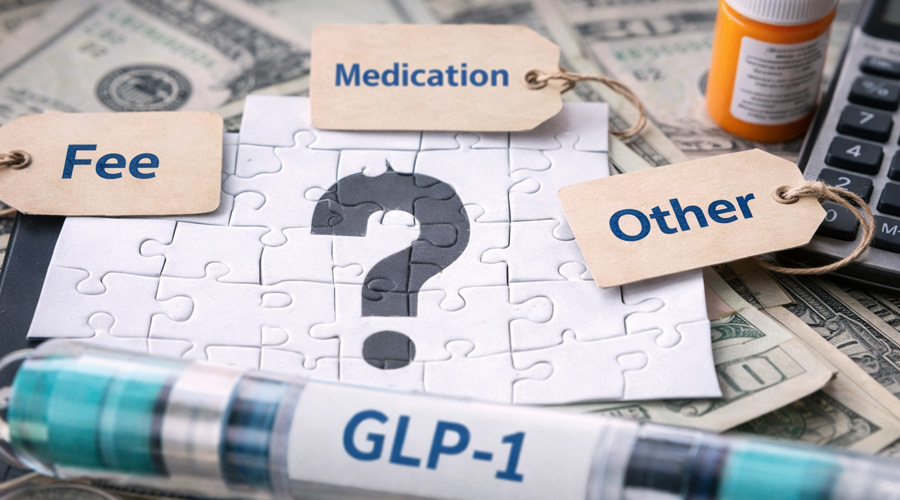
This article explains why a GLP-1 program’s listed price may not reflect the full cost structure at first glance. The main fee can cover only one layer of the service, while medication, fulfillment, and support-related charges may appear through separate parts of the service.
Many online GLP-1 programs do not show every cost upfront. GLP-1 program costs are often split across program fees, medication charges, administrative add-ons, and shipping or consultation costs that may appear separately from the main advertised price.
This cost structure usually reflects how the program is structured. Platforms may bill for access, coordination, or follow-up, while medication fulfillment may be billed through a separate fulfillment process.
That is why hidden GLP-1 program fees online are often less about undisclosed charges and more about cost details being separated across different parts of the service.
1. Why Are Some GLP-1 Program Costs Not Obvious Upfront?
Some costs are less obvious because many online GLP-1 programs do not use one fully bundled fee. Instead, they often break the service into separate parts that are billed, displayed, or explained in different places.
Common examples include:
Program access fees
Medication billed separately
Intake or follow-up charges
Shipping or pharmacy fulfillment fees
This does not always mean the pricing is hidden. In many cases, the issue is that the full cost structure is spread across checkout pages, plan descriptions, fulfillment disclosures, or ongoing account terms. That separation can make the main advertised price look simpler than the total structure behind it.
A useful way to read this is to separate four common disclosure locations seen across online services:
Program page disclosures
Checkout disclosures
Terms and account disclosures
Fulfillment or pharmacy disclosures
Table 1. Where GLP-1 Program Cost Disclosures May Appear
Disclosure location
What may be explained there
Why it may be missed
Program page
Base platform fee, access features, or broad service description
The main listed price may emphasize only the first service layer
Checkout flow
Additional service charges, recurring billing details, or fee acknowledgments
Later-step disclosures can be overlooked when attention is focused on completing enrollment
Terms or account pages
Ongoing billing language, service boundaries, or separate support-related charges
FTC guidance has long warned that material disclosures should not be buried in lengthy terms alone (FTC, 2013)
Fulfillment or pharmacy notices
Medication-related charges, shipment details, or pharmacy handling terms
These details may appear only after prescribing or during the fulfillment stage, which makes them feel separate from the advertised program fee (FDA, 2024; FTC, 2024)
This taxonomy does not mean every program uses the same structure. It shows why the full cost picture may be distributed across multiple disclosure points rather than one all-in-one pricing statement.
2. Are Medication Costs and Program Fees Usually Charged Separately?
In many online GLP-1 programs, the answer is yes. The platform fee and the medication fee are often treated as different charges because they cover different parts of the service.
One charge may cover access to the platform, intake review, care coordination, or ongoing messaging. Another may apply only if medication is prescribed and sent for pharmacy fulfillment (FDA, 2025).
This separation matters because the main listed price may reflect only the service layer. It may not reflect the full cost tied to medication fulfillment, dispensing, or shipment.
Table 2. How Program Fees and Medication Charges Are Often Separated
Cost layer
What it usually covers
When it may appear
Program fee
Platform access, intake review, care coordination, or messaging
Often shown early as the main listed price
Medication charge
Prescribed medication tied to pharmacy fulfillment
Often appears only if medication is prescribed
Fulfillment-related cost
Processing, dispensing, or shipment linked to pharmacy handling
May appear later in the process or in separate disclosures
That is one reason people searching what is included in GLP-1 program cost often find that the advertised fee and the total program cost are not the same thing.
Important Clarification. A program fee is not always the same thing as the full cost tied to medication. In many online GLP-1 programs, platform billing, clinician review, and pharmacy fulfillment are related parts of one process, but they are not always billed as one combined charge.
3. What Extra Administrative Fees Can Appear Outside the Main Price?
Some online GLP-1 programs add administrative charges that are separate from the main listed fee. These charges may cover account setup, follow-up review, prescription handling, refill processing, or other non-medication support functions handled through the platform.
Common examples include:
Intake processing fees
Refill coordination charges
Follow-up review fees
Separate support or messaging add-ons
These charges are not always framed as medication costs. They are often tied to the service layer around the program.
Table 3. Common Administrative Add-Ons Outside the Main Price
Administrative add-on
What it is usually tied to
How it is often presented
Intake processing fee
Review or setup steps linked to account onboarding
Separate from the main listed program fee
Refill coordination charge
Handling refill-related platform tasks or request routing
Added when refill support is needed
Follow-up review fee
Additional non-routine review or check-in activity
Shown outside the recurring base fee
Support or messaging add-on
Extra access to platform-based communication features
Offered as a separate service layer
That is why extra charges in online GLP-1 programs can appear even when the main advertised price seems clear at first glance.
4. Who Controls the Different Parts of a GLP-1 Program’s Cost Structure?
Different parts of the cost structure are often controlled by different parties.
Common control areas include:
Platform billing and account access
Support features or care coordination fees
Clinician prescribing decisions
Pharmacy fulfillment charges or disclosures
A licensed clinician controls medical decisions, but that does not always mean the clinician controls how non-clinical charges are presented or billed. Pharmacy fulfillment may involve another layer with its own charges or disclosures (FDA, 2024).
This matters because one advertised price may reflect only the part billed through the platform. Other charges may appear only when the process reaches prescribing, refill handling, or shipment. That is one reason GLP-1 program costs can look simple at the start but become more detailed as each part of the service is disclosed.
Important Clarification. Platform billing and clinician authority are not the same function. A licensed clinician controls prescribing decisions, while the platform may control subscription fees, account features, or service-related charges. Pharmacy fulfillment may introduce another separate layer of cost disclosure.
5. Are Shipping or Consultation Costs Always Included in the Advertised Price?
Not always. In many online GLP-1 programs, shipping or consultation costs are handled differently from the main platform fee. Some programs include certain support touchpoints in a recurring charge, while others treat clinician review, follow-up contact, or shipment-related costs as separate parts of the service.
This can create confusion when the first listed price appears to describe the full program.
In practice, shipping and consultation costs for GLP-1 telehealth programs may depend on how the platform defines care access, how pharmacy fulfillment is arranged, and when additional review is needed.
Table 4. How Shipping and Consultation Costs May Be Presented
Cost area
Sometimes included in the main price
Sometimes shown separately
Shipping
When shipment is treated as part of a bundled service
When pharmacy fulfillment or delivery is billed as its own step
Consultation
When routine clinician review is included in the platform fee
When follow-up review or extra contact is treated as a separate charge
Fulfillment-related handling
When the program presents more of the service as one package
When dispensing or processing is disclosed outside the main listed fee
That does not automatically make the pricing unclear, but it does mean the full cost may be disclosed across more than one step.
6. What Does a Monthly GLP-1 Program Fee Usually Not Include?
A monthly GLP-1 program fee does not always represent the full cost of the program. In many cases, it reflects only the platform layer, not every service or fulfillment step connected to the program. That can include account access, intake handling, messaging tools, or general care coordination, while other charges may still apply elsewhere.
Common exclusions may include:
Medication fulfillment charges
Shipping-related costs
Additional follow-up review
Separate administrative processing fees
Table 5. What a Monthly GLP-1 Program Fee May and May Not Include
Monthly fee scope
Often included
Often not included
Platform service layer
Account access, intake handling, messaging tools, or care coordination
Medication fulfillment or shipment
Recurring program charge
Routine platform-based support features
Additional follow-up review outside the base service
Advertised base price
The core service package defined by the platform
Separate administrative processing fees or fulfillment-related charges
The exact structure depends on how the program defines its monthly service. This is why people looking at GLP-1 program costs often find that a recurring fee explains only one part of the overall cost structure, not the full set of possible charges.
7. Why Do Online GLP-1 Program Cost Structures Vary So Much?
Online GLP-1 program cost structures vary because programs do not all package the same functions in the same way.
Common differences include:
Bundled platform access and follow-up communication
Separate care coordination or service layers
Medication fulfillment disclosed apart from platform fees
Charges grouped differently across billing steps
Variation also comes from how medication fulfillment is handled. Some programs present fulfillment-related costs as distinct from platform services, while others frame more of the process as one connected offering.
A useful way to read these differences is to separate three common disclosure models:
Bundled disclosure model
Layered disclosure model
Triggered disclosure model
In a bundled disclosure model, most core charges are grouped together early. In a layered disclosure model, the platform fee appears first and related charges are explained across later disclosures. In a triggered disclosure model, some charges appear only after a later event, such as prescribing, refill handling, or shipment.
Table 6. A Simple Framework for How GLP-1 Program Costs May Be Disclosed
Disclosure model
What is usually shown first
What may appear later
Bundled
A broader program fee that reflects more than one service layer
Fewer separate add-ons, though some charges may still sit outside the base fee
Layered
A platform or program fee presented as the main listed price
Medication, fulfillment, support, or review charges disclosed elsewhere
Triggered
An entry price tied to initial access or enrollment
Charges tied to later process steps such as prescribing, refill handling, or shipment
This framework does not describe one single industry rule. It explains a recurring pricing pattern seen across online services where charges may be grouped, separated, or disclosed later in the process, which is similar to broader FTC discussions of drip pricing and fee disclosure (FTC, 2012; FTC, 2025).
The result is not always a difference in what exists, but in how charges are grouped, labeled, and disclosed. That is why cost comparisons can look simple on the surface while remaining structurally different underneath.
8. What Do People Often Misunderstand as Hidden GLP-1 Program Fees?
A common misunderstanding is that any later charge must have been hidden from the start. In many cases, the issue is not that the charge did not exist.
Common reasons for confusion include:
The charge was disclosed in a different place
The charge was tied to a different service layer
The charge appeared only after the process moved forward
This often happens when people expect one price to cover the full program. A listed fee may describe only platform access, while medication fulfillment, shipping, or follow-up review appears elsewhere.
That does not remove the need for clear disclosure (FTC, 2025). It does show why hidden GLP-1 program fees online are often better understood as separated cost disclosures rather than one single undisclosed charge.
9. What Does the Upfront GLP-1 Program Price Actually Represent?
In many cases, the upfront price represents only one part of the program, not the full cost of every related service.
It may describe:
Platform access
Account features
Routine coordination
Other charges may still be attached to:
Medication fulfillment
Shipping
Additional review
That is the key boundary in this topic. The listed price may explain how the platform bills its service, but it does not always define the full cost structure across every step.
Licensed clinicians control prescribing decisions, while platforms and fulfillment partners may control how other charges are presented (FDA, 2024). This is why GLP-1 program costs often need to be read as a layered structure rather than one all-inclusive price.
Important Clarification. The upfront price is not always a complete statement of every related cost in the program. It often reflects how the platform defines its service layer, while clinician decisions and fulfillment-related charges may be handled through separate parts of the process.
Sources:
FTC. 2012. The Economics of Drip Pricing. Federal Trade Commission.
FTC. 2013. .com Disclosures: How to Make Effective Disclosures in Digital Advertising. Federal Trade Commission.
FTC. 2024. Negative Option Rule. Federal Trade Commission.
FTC. 2025. The Rule on Unfair or Deceptive Fees: Frequently Asked Questions. Federal Trade Commission.
FDA. 2025. How to Buy Medicines Safely From an Online Pharmacy. U.S. Food and Drug Administration. January 2, 2025.
FDA. 2024. Navigating the World of Online Pharmacies with CDR Lysette Deshields. U.S. Food and Drug Administration. March 7, 2024.
FTC. 2025. Letter from Sam Levine, Director, Bureau of Consumer Protection, to Governor Jared Polis Regarding the Junk Fee Rule. Federal Trade Commission. January 15, 2025.