Payment methods are the front door to billing in an online GLP-1 program, but they do not explain the whole system. Stored cards, recurring charges, receipts, and platform limits show where payment processing starts and where its role stops.
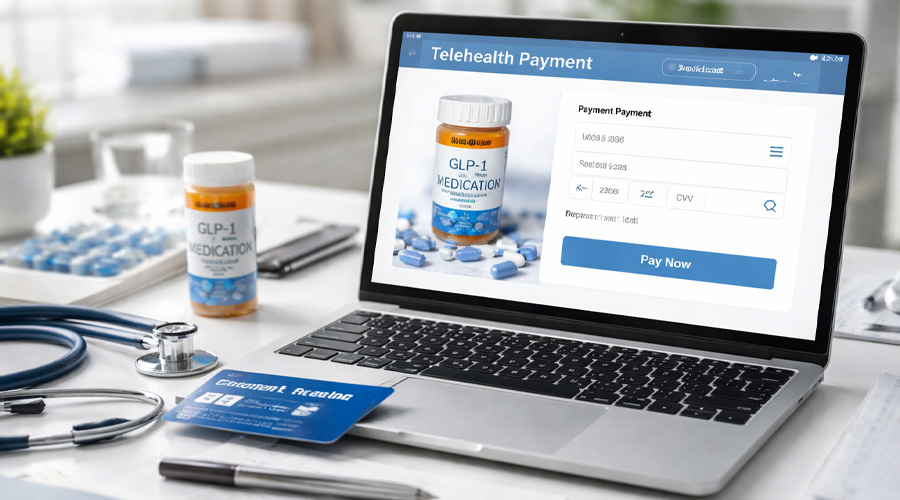
Online GLP-1 program payment methods usually include credit cards, debit cards, and, in some cases, Health Savings Account (HSA) or Flexible Spending Account (FSA) cards. These payment methods let telehealth platforms collect charges for program fees or related services through a secure checkout flow or stored payment method.
In most cases, online GLP-1 telehealth programs save a payment method for future charges, renewals, or account updates. Payment method options vary by provider, platform setup, processor rules, and whether HSA or FSA cards can be accepted for eligible expenses.
1. What Payment Methods Do Online GLP-1 Programs Usually Accept?
Most online GLP-1 programs accept standard credit and debit cards. Some platforms also list HSA or FSA cards as possible payment methods. That option usually depends on the payment processor, merchant setup, and whether the charge qualifies as an eligible expense (IRS, 2025).
In some cases, programs may also offer third-party financing or installment payments. When that option appears, it is usually handled by a separate financing service rather than the telehealth platform itself.
Common payment method categories include:
Table 1. Common Payment Method Types in Online GLP-1 Programs
Payment Method Type
How It Is Usually Used
What May Limit Availability
Credit card
Entered at checkout or stored for future charges
Processor support and provider billing setup
Debit card
Used like a card payment at checkout or on file
Processor support and provider billing setup
HSA or FSA card
Sometimes accepted for eligible expenses
Eligibility rules, processor support, and merchant setup
Financing or installments
Sometimes offered through a separate service
Third-party financing availability and platform integration
Payment method availability does not explain how often charges occur. It only explains how a charge is paid once it is approved. Billing cycle rules are a separate part of the program and are usually described elsewhere.
2. How Do Online GLP-1 Programs Usually Authorize Payment?
Most online GLP-1 programs collect payment through a secure checkout page. At that stage, the platform asks for card details or another accepted payment method and sends the charge through a payment processor for approval. If the charge is approved, the transaction is completed and recorded in the account (CFPB, 2015).
Many telehealth platforms also ask a member to keep a payment method on file. That stored payment method may be used for:
future renewals
account fees
other scheduled charges tied to the program
Payment authorization is not the same as clinical approval. It only confirms that the platform can process a charge using the selected payment method under its billing setup.
Important Clarification. Payment approval confirms that a transaction can be processed. It does not confirm eligibility, prescribing, or any other clinical decision, which are determined separately by licensed clinicians.
3. Who Processes Payments in an Online GLP-1 Program?
In most cases, the telehealth platform does not process card payments by itself. The platform usually connects to a third-party payment processor that handles card authorization, transaction routing, and payment confirmation. That processor moves payment data between the platform, the card network, and the issuing bank.
The platform still controls parts of the payment experience inside the account. That may include:
how the checkout flow appears
when a charge is submitted
when a card must be updated
how payment receipts are shown after approval
This payment role is separate from clinical review. Licensed clinicians decide eligibility, prescribing, and treatment-related questions. Payment processors and telehealth platforms handle the financial transaction, not the medical decision.
4. What Is the Difference Between a Payment Method and a Billing Cycle?
A payment method explains how a charge is paid. In most online GLP-1 programs, that means a credit card, debit card, or another accepted payment option on file. It does not explain when the charge happens or how often the account is billed.
A billing cycle explains when charges are scheduled. That may include an initial charge, a renewal date, or another recurring billing point set by the platform. Those terms are related, but they are not the same part of the payment system.
The difference can be framed this way:
Table 2. Payment Method vs. Billing Cycle
Term
What It Describes
Common Example
Payment method
How the platform collects a charge
Credit card, debit card, or HSA or FSA card if accepted
Billing cycle
When the platform schedules a charge
Initial charge, renewal date, or recurring billing date
Stored payment method
A payment option saved for future use
Card kept on file for a later approved charge
This difference matters because payment method questions are really questions about payment rails. Billing cycle details belong to a separate part of the program and are usually explained in distinct billing terms.
5. What Payment Details Are Usually Needed to Complete a Charge?
Most online GLP-1 programs ask for basic billing details before a charge can be approved. That often includes:
card number
expiration date
security code
cardholder name
billing ZIP code
If another payment method is accepted, the platform usually asks for the account details tied to that method.
Some telehealth platforms also collect an email address for payment receipts and account notices. In many cases, the payment processor checks that the billing details match the card issuer records before the transaction is approved.
These payment details help complete the charge, but they do not affect clinical review. Licensed clinicians do not use card data to make prescribing, eligibility, or treatment decisions.
6. Does the Payment Method Affect Eligibility, Prescribing, or Clinical Decisions?
The payment method does not determine:
whether someone qualifies for care
whether a prescription is issued
whether participation continues in a program
Those decisions are made through clinical review, based on intake information and the judgment of a licensed clinician. Payment systems handle the financial transaction, not the medical decision.
A valid payment method may still be required before certain platform functions can move forward. That requirement relates to account setup or charge approval, not to the clinician’s role in evaluating care.
This distinction matters because payment and treatment are separate functions inside online GLP-1 programs. The platform may collect payment, but licensed clinicians control eligibility, prescribing, and treatment-related decisions.
Important Clarification. A stored or valid payment method supports account and billing functions. It does not determine whether care is approved, whether a prescription is issued, or whether treatment continues, which remain clinical decisions.
7. Why Do Payment Method Options Differ Across Online GLP-1 Programs?
Payment method options differ because online GLP-1 programs do not all use the same platform setup, processor, or checkout design. One platform may support only standard card payments, while another may also accept HSA or FSA cards or offer a financing option through a third party.
The key operational difference is that payment options are shaped upstream, before checkout ever appears. A platform’s merchant account, processor settings, stored-card rules, and account logic help determine which payment methods can be shown, saved, or reused inside the billing flow.
Internal billing rules also affect what appears at checkout. Some platforms require a stored card for recurring charges, while others allow payment to be entered again at each billing point, depending on how the account system is built.
Common reasons for variation include:
Table 3. Why Payment Method Options Vary Across Programs
Source of Variation
What It May Change
Example of the Difference
Payment processor support
Which payment types can be accepted
Standard cards only or cards plus HSA or FSA support
Platform billing setup
Whether a payment method must stay on file
Stored card required or payment entered at each charge
Third-party service integration
Whether financing appears as an option
No financing option or a separate installment service
Merchant account rules
How certain charges can be submitted
Limits on accepted payment types or checkout design
These differences do not always reflect a difference in clinical review. In many cases, they reflect technical setup, merchant account rules, processor support, and how the telehealth platform chooses to manage payment collection.
8. How Do Telehealth Platforms Usually Handle Receipts, Confirmations, and Stored Payment Records?
After a payment is approved, most telehealth platforms show a confirmation on screen and send a receipt by email (FTC, 2021). The account dashboard may also store a payment record that may show:
charge date
amount
payment status
last four digits of the card on file in some cases
Stored payment records may support:
future renewals
account updates
receipt access
In many cases, the platform allows an expired card to be replaced or billing details to be updated before the next charge is submitted.
These records document the transaction, but they do not explain refund rules, cancellation terms, or pause policies. Those topics are usually described in separate billing and account policy pages.
Important Clarification. A payment receipt, confirmation screen, or stored payment record documents that a transaction was processed. It does not confirm eligibility, prescribing status, or any broader clinical approval within the program.
9. What Does This Payment Methods Question Cover, and What Does It Not Cover?
This payment methods question covers how online GLP-1 programs usually collect charges, which payment options may be accepted, how payment authorization works, and how receipts or stored payment records are commonly handled. In plain terms, it explains the payment rails behind the transaction.
The scope can be framed this way:
Table 4. What This Payment Methods Question Covers and Does Not Cover
Topic Area
Covered Here
Not Covered Here
Payment execution
Accepted payment methods, authorization, and stored payment records
Insurance claim handling or benefit processing
Billing context
High-level difference between payment method and billing cycle
Detailed billing cycle terms or renewal policy rules
Account records
Receipts, confirmations, and payment history display
Refund terms, cancellation rules, or pause policies
Clinical role
Separation between payment systems and clinician decisions
Eligibility review, prescribing standards, or treatment decisions
It does not explain insurance workflows, self-pay model structure, refund terms, cancellation rules, pause policies, or detailed billing cycle terms. Those topics belong to separate operational questions and are usually addressed on different policy or pricing pages.
It also does not determine clinical access. Licensed clinicians decide eligibility, prescribing, and treatment-related questions. Payment systems only support the financial side of the program.
Important Clarification. This article explains how payment methods support charge processing inside an online GLP-1 platform. It does not explain insurance handling, refund terms, or clinical approval, which are governed by separate billing policies and separate licensed clinician review.